

Your reps spent Monday cleaning a lead list, Tuesday researching accounts, and Wednesday chasing a prospect across four email threads to find a meeting slot. By Thursday, the inbound lead from the weekend had already signed with someone faster. Sound familiar? This guide is for sales leaders, RevOps teams, and founders who sell to other businesses and feel like most of the week goes to everything except selling.
Below are the ten problems that drain B2B sales teams the most in 2026. For each one, you’ll see what breaks, why it happens, how to fix it, and which in-depth Lara Translate guide compares the tools.
|
TL;DR
|
1. Your contact data is bad or incomplete
Emails bounce. Direct dials ring at the wrong company. Half the list has no phone number at all, and the half that does is two job changes out of date. Every sequence built on that data starts with a handicap.
Why it happens. Business contact data decays constantly as people change roles and companies. Coverage is also uneven: providers that are strong in North America or Western Europe often thin out fast in Latin America, Asia, or the Middle East. Teams expanding abroad end up stitching together several regional sources.
How to fix it. Audit your current provider against the regions you actually sell into, not the ones on its homepage. Run a sample of 200 target accounts through two or three vendors and compare match rates and bounce rates. Then automate enrichment, so records refresh on a schedule instead of once a year.
Our comparison of B2B and B2C data providers with global coverage shows which vendors hold up outside the US and Europe.

2. Researching accounts takes too long
A rep spends 40 minutes reading annual reports and news before a single call. Multiply that by 30 target accounts a week, and you’ve lost a full day. Worse, the “lookalike” list your team built from industry codes keeps surfacing companies that look similar on paper and nothing alike in practice.
Why it happens. Most account lists still rely on static classifications like SIC and NAICS codes. Those codes miss companies that don’t fit a clean category and lump together businesses with very different models. So reps compensate with manual research.
How to fix it. Use AI research tools that group companies by what they actually do, then summarize filings, funding, and news in minutes. They help sales and RevOps build sharper lookalike lists, and they help strategy and finance teams with peer analysis. Keep a human check on anything that ends up in a proposal.
We reviewed the leading options in our guide to AI company research and comparable analysis tools.
3. Your pipeline is empty
Inbound has slowed, referrals are drying up, and the quarter’s target hasn’t moved. Here’s the thing most teams miss: they build expensive multi-channel infrastructure before they know which channel their buyers actually answer.
Why it happens. Outbound takes skills, tooling, and deliverability know-how that small teams rarely have in-house. Hiring and ramping SDRs takes months, and early experiments often fail for reasons nobody can diagnose. Sales planning platforms like Lative help teams model ramp time and productive capacity per rep before committing to new headcount, so the pipeline plan reflects when new hires will realistically contribute.
How to fix it. Match the approach to your stage. If you’re still validating an audience, test one channel with a focused partner and measure replies, not volume. If a channel already works, scale it with a team that can run it across segments and regions. Ask every agency how it handles outreach in languages other than English if you plan to sell abroad.
For a shortlist matched to company stage, read our roundup of B2B outbound lead generation agencies.
4. You’re not booking enough qualified meetings
The calendar looks full, but half the meetings go nowhere. The prospect wasn’t a fit, had no budget, or thought they were joining a webinar. Poorly qualified meetings burn your closers’ time and delay real market feedback.
Why it happens. Many teams measure meetings booked, not meetings that convert. Without a shared definition of “qualified,” setters optimize for volume, and account executives stop trusting the pipeline.
How to fix it. Write down your qualification criteria before you hire anyone, and tie payment or targets to meetings that meet them. When comparing appointment-setting providers, look closely at outreach model, qualification standards, and pricing (per meeting, retainer, or hybrid), because they vary a lot.
Our guide to appointment setting agencies that book qualified meetings breaks down those differences provider by provider.
Your best sales deck, in your prospect’s language
Upload a pitch deck or proposal and get it back translated with the layout intact, ready to send in 200+ languages.
5. Leads wait too long for a response
A prospect fills in your demo form at 7 p.m. on a Friday. Your rep sees it Monday morning. By then, the prospect has already talked to a competitor. Speed matters more than most teams admit.
Why it happens. Leads arrive around the clock, but reps work from desktops during office hours. Notifications get buried in email, and routing rules send leads to people who are on vacation. Research published in the Harvard Business Review found that companies contacting leads within an hour were nearly seven times as likely to qualify them as companies that waited even one hour longer.
How to fix it. Put lead alerts on the device reps always carry. A mobile CRM with instant notifications, one-tap calling, and templated first replies closes the gap between “lead arrived” and “lead contacted.” Set a response-time target and report on it weekly.
See our comparison of mobile CRM apps built for instant lead response.
6. Scheduling back-and-forth and no-shows
“Does Tuesday work?” “How about Thursday?” “Sorry, which time zone?” Every extra email in the scheduling chain is a chance for the prospect to go cold. And once a meeting is booked, a surprising number of people simply don’t show up.
Why it happens. Manual scheduling doesn’t scale across time zones, round-robin teams, or multi-person buying committees. No-shows rise when the invite never lands in the prospect’s calendar or reminders don’t exist.
How to fix it. Let prospects book directly from your form, email, or website, with automatic routing to the right rep and built-in reminders. AI scheduling tools also handle rescheduling without a single email. Read our guide to AI scheduling and meeting booking software to compare options.
If you run webinars or sales events, make it easy for attendees to save the date too. Our list of add-to-calendar tools that reduce event no-shows covers that side of the problem.

7. Your sales tools don’t talk to each other
Intent data lives in one platform, enrichment in another, call recordings in a third. Your account priority list was accurate in January. It’s October, and reps have quietly stopped trusting it.
Why it happens. Most sales stacks grew one tool at a time, each bought to solve a single problem. Nobody owns the connections between them, so signals get lost and priorities go stale.
How to fix it. Add an orchestration layer that pulls signals from your existing tools, keeps account scores current, and pushes the next best action to reps. Before buying, map which signals actually predict deals for you. That list should drive the setup, not the vendor’s default playbook.
We compared the main platforms in our guide to AI GTM orchestration and revenue operations platforms.
8. Your CRM is out of date because nobody updates it
Ask any sales manager about CRM hygiene and watch them sigh. Call notes live in personal docs. Email threads never get logged. The forecast meeting turns into a round of “let me check and get back to you.”
Why it happens. Traditional CRMs depend on manual data entry, and reps see it as admin work that doesn’t help them close. So the data that would make the CRM useful never gets there.
How to fix it. Choose a CRM that captures activity automatically from email, calendars, and calls, then enriches records without anyone typing. AI-native CRMs are built around this idea. If switching isn’t realistic, add automatic activity capture to the CRM you have.
Our review of AI-native CRM platforms that update themselves compares the newer options with established players.
9. Reps spend too little time actually selling
Between prospecting, writing emails, logging calls, and internal meetings, selling time shrinks every year. Buyers aren’t helping either: Gartner reports that 75% of B2B buyers prefer a rep-free sales experience. When reps do get a conversation, they need to make it count.
Why it happens. Repetitive work piles up around every deal, and many teams buy AI tools without deciding which part of the job they should take over first. The result is more automated noise and more generic messaging, without better pipeline.
How to fix it. Decide which layer to automate first: prospect data, outreach execution, or full-cycle AI agents. Pilot one tool against a clear metric, such as qualified meetings per rep, before adding another. Keep humans on discovery calls and negotiation, where judgment matters most.
Our guide to AI sales tools compared and priced helps you pick where to start.
10. Your buyers speak a different language
You’ve found product-market fit at home and opened a new market. The data provider covers it, the agency is ready, and the first replies come back in German, Japanese, or Portuguese. Now the deck, the proposal, the follow-ups, and the contract all need to work in another language, fast.
Why it happens. Sales material is usually written once, in English, by people who don’t speak the target language. Translation gets handled ad hoc: a colleague who “speaks some French,” a generic chatbot, or an agency with a two-week turnaround. Product terms drift, layouts break, and the prospect notices.
How to fix it. Treat sales localization as part of market entry. Translate your core assets (deck, one-pager, case studies, proposal template) before outreach starts. Lock product names and key terms in a glossary. Make it easy for reps to read and reply to messages in the buyer’s language without waiting on anyone.
Lara Translate covers this workflow. It translates decks, proposals, and contracts across 60+ file formats, including PPTX, DOCX, and PDF, and returns them with the original layout preserved. Glossaries keep product names and technical terms consistent in every language.
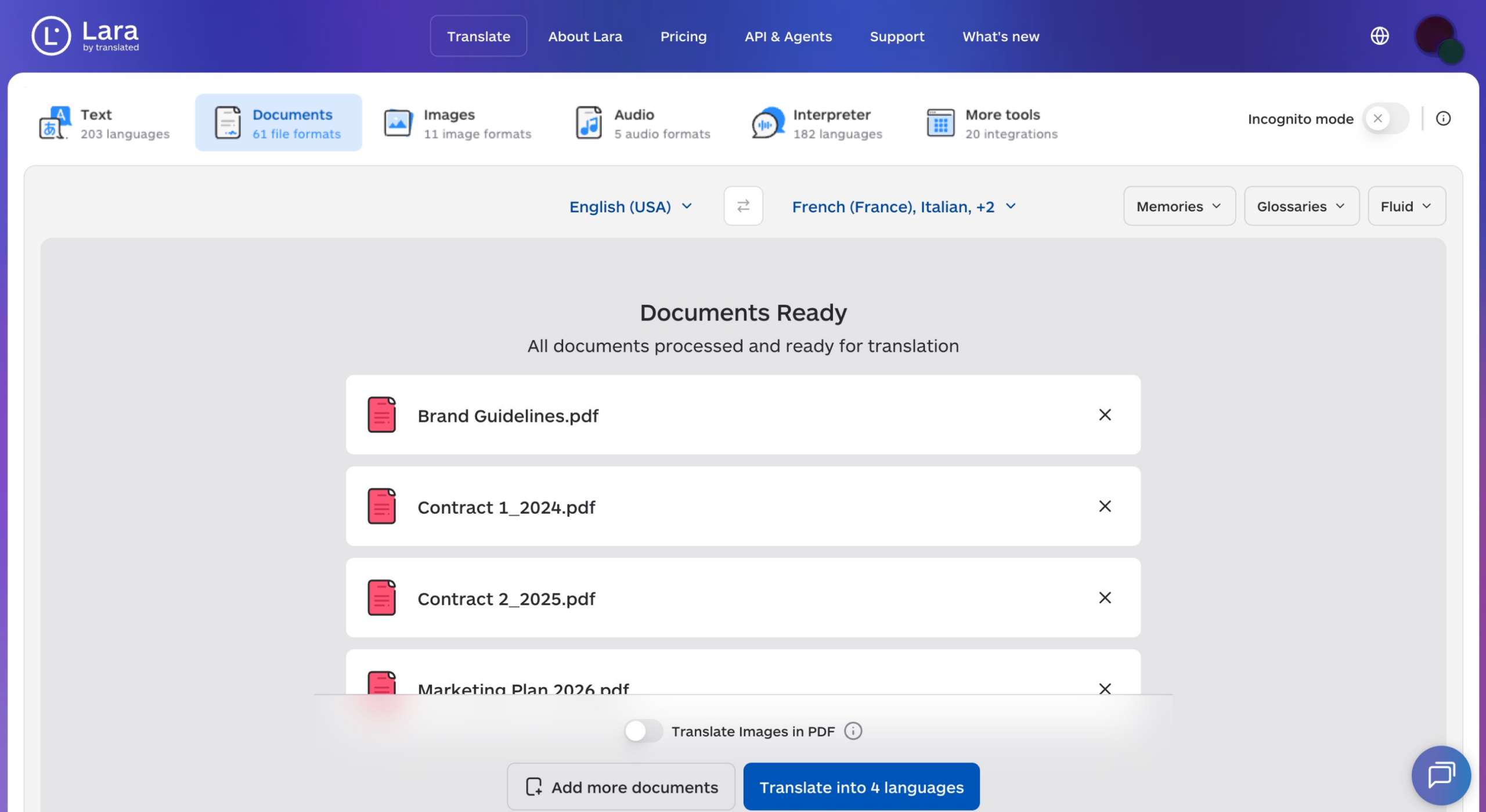
With the Lara Translate Chrome extension, reps can translate emails in place inside their inbox, and Interpreter mode handles live conversations on web and mobile. For confidential deal documents, Incognito mode processes content without storing it. All of it works across 200+ languages.
B2B sales problems and solutions at a glance
| Problem | Solution | Read more |
|---|---|---|
| Bad or incomplete data | Data provider tested on your regions | Global data providers |
| Slow account research | AI research and lookalike tools | Company research tools |
| Empty pipeline | Stage-matched outbound partner | Outbound agencies |
| Too few qualified meetings | Clear criteria, appointment setters | Appointment setting partners |
| Slow lead response | Mobile CRM with instant alerts | Mobile CRM apps |
| Scheduling friction, no-shows | Self-serve booking and reminders | Scheduling software |
| Disconnected tools | GTM orchestration layer | RevOps platforms |
| CRM nobody updates | Automatic activity capture | AI-native CRMs |
| Low rep productivity | Automate one layer at a time | AI sales tools |
| Buyers speak another language | AI translation with glossaries | Lara Translate |
Reply to every prospect in their language, the same day
Translate emails, proposals, and contracts with your product terms locked in a glossary, so nothing gets lost between markets.
The bottom line
You won’t fix ten problems at once, and you don’t need to. Start with the leak closest to revenue: slow responses and unqualified meetings cost you deals this month. Then work upstream to data, research, and pipeline. Most of these problems share a root cause, too many disconnected steps between “lead appears” and “rep acts,” so every fix makes the next one easier.
Have a valuable tool, resource, or insight that could enhance one of our articles?
Send us an email at press@laratranslate.com
We’ll be happy to review it and consider it for inclusion to enrich our content for our readers! ✍️
FAQ
What are the biggest challenges in B2B sales today?
The biggest challenges in B2B sales today are poor contact data, slow account research, thin pipeline, unqualified meetings, slow lead response, scheduling friction, disconnected tools, outdated CRMs, low rep productivity, and language barriers in new markets. Most teams face several at once, so start with the one closest to revenue.
How fast should you respond to a B2B lead?
Respond within an hour, and sooner if you can. Research published in the Harvard Business Review found that companies contacting leads within an hour were nearly seven times as likely to qualify them as companies that waited an hour longer.
Should I hire an outbound agency or build an SDR team?
Hire an agency if you’re still validating which audience and channel work, or if you need pipeline faster than you can recruit. Build in-house once a channel is proven and you want long-term control over messaging, data, and team knowledge.
How do I keep my CRM up to date without manual data entry?
Use a CRM that captures emails, meetings, and calls automatically and enriches records in the background. AI-native CRMs do this by default, and many established CRMs support it through add-ons.
How do I sell to prospects who speak another language?
Translate your core sales assets before outreach starts, keep product terms consistent with a glossary, and give reps a fast way to read and reply in the buyer’s language. Lara Translate supports this with layout-preserving document translation, glossaries, in-inbox email translation, and live interpretation across 200+ languages.
This article is about
- The ten problems that cost B2B sales teams the most pipeline in 2026.
- Why contact data and account lists break down, especially outside the US and Western Europe.
- How outbound and appointment-setting partners should be chosen by company stage and qualification criteria.
- Where speed to lead, scheduling, and CRM hygiene quietly leak deals.
- How Lara Translate helps sales teams sell into new markets with translated decks, proposals, and emails.
- Which in-depth Lara Translate comparison to read next for each problem.
Sources
This article was produced by the Lara Translate content team. Lara Translate is an AI translation platform built by Translated, with more than 25 years of professional translation experience. Sales and RevOps teams use Lara Translate to localize pitch decks, proposals, and outreach for international buyers, across 200+ languages and 60+ file formats.