

A regional sales team gets handed a list of “high-priority” accounts every Monday, except the scoring behind that list hasn’t reflected reality in weeks, and nobody has time to manually re-check thousands of records against what’s actually happening in the market. By the time a rep calls, the account has already moved on, and the list quietly becomes something everyone works around instead of trusting.
AI GTM orchestration and revenue operations platforms exist to close that gap, connecting data sources, enriching records, and scoring accounts continuously so sales and marketing teams act on what’s actually current. This guide compares ten leading platforms in 2026, and closes with something that matters the moment an enterprise’s GTM operation spans genuinely global regional teams: what happens to the AI-generated insights and account briefs these platforms produce once the regional team reading them doesn’t work primarily in English.
|
TL;DR
|
What makes an AI GTM orchestration platform worth using in 2026?
Nearly every platform in this category shares the same underlying job: pulling data from across an organization’s tech stack, enriching and scoring accounts or leads, and routing that prioritization into a CRM or sales workflow so reps act on current information. Where these platforms genuinely diverge is how much custom flexibility they offer, how deep their intent data actually goes, and whether they replace or sit alongside an organization’s existing systems.
Flexible, self-built workflows and pre-built account-based intent engines represent different approaches to the same core problem. Clay lets teams build custom enrichment and signal-to-action workflows themselves, while 6sense and Demandbase provide more structured, pre-built predictive intent and account-based orchestration.
Middleware-style orchestration and full account-based suites solve different scopes of integration. Scalestack positions itself specifically as the governed layer connecting an organization’s existing data sources, CRM, and the agents acting on them, while Demandbase bundles intent, advertising, and sales orchestration into one more complete, self-contained platform.
Continuous, bi-directional data enrichment and periodic manual profiling produce very different levels of data trust over time. Platforms that sync data bi-directionally and in real time keep CRM records current automatically, while manual account profiling processes tend to go stale between review cycles.
Deep account-based intent data and conversation-level revenue execution insight answer different questions. 6sense and Demandbase focus on identifying which accounts are actively in-market, while Gong and Clari focus on what’s happening inside deals already in the pipeline.
None of these platforms fully address what happens once their AI-generated insights need to reach a regional sales team that doesn’t work primarily in English. Account scoring rationale, enrichment summaries, and prioritization briefs generated by these platforms are typically produced in English, and a genuinely global enterprise with regional GTM teams across many countries needs that content translated accurately to actually be usable everywhere it’s meant to guide action. A dedicated translation tool can help with that specific gap, a point we return to at the end of this guide.
The best AI GTM orchestration and revenue operations platforms in 2026
The selections below are organized by use case. Prices are in US dollars where stated; confirm current billing terms, usage allowances, and implementation fees with each vendor.
| Platform | Best for | Model | Pricing |
|---|---|---|---|
| Clay | Most flexible enrichment and custom signal-to-action workflow building | Flexible GTM data orchestration platform | Custom, published tiers |
| 6sense | Deepest enterprise account-based intent data and predictive scoring | AI-powered revenue intelligence platform | Custom, contact sales |
| Demandbase | Most complete account-based motion in one platform | Account-based GTM platform | Custom, contact sales |
| Scalestack | Keeping AI agents working on clean, governed, current data without replacing your stack | Context infrastructure for enterprise agents | Custom, contact sales |
| HockeyStack | Full-journey attribution and AI-driven pipeline analytics | GTM intelligence and attribution platform | Custom, contact sales |
| Gong | Conversation intelligence driving coaching and deal forecasting | Revenue execution and conversation intelligence platform | Custom, contact sales |
| Clari | Revenue forecasting and pipeline health visibility | Revenue forecasting platform | Custom, contact sales |
| Salesmotion | Transparent, faster-to-deploy account signals versus opaque intent scores | Account intelligence platform | From $85/month individual |
| Common Room | Trigger-based outbound and expansion signal detection | Signal-based GTM platform | Custom, contact sales |
| Usergems | Job-change and relationship-based buying signal tracking | Relationship intelligence platform | Custom, contact sales |
Clay
Best for: Teams wanting flexible enrichment, research, and custom signal-to-action orchestration they build themselves.
Clay lets GTM teams design governed enrichment and workflow logic tailored to their specific motion, appealing to teams that want direct control over how signals turn into actions rather than a pre-built, fixed system.
Pricing: Free plan and published Launch and Growth tiers; Enterprise pricing is custom. Paid usage depends on actions and data credits.
Verdict: Consider Clay when direct control over custom enrichment and workflow logic outweighs a more pre-built, structured system.

6sense
Best for: Enterprise account-based marketing programs needing predictive intent and account prioritization.
6sense analyzes intent signals, technographic data, and firmographic attributes to predict which accounts are actively in an in-market buying cycle, segmenting audiences by buying stage for large, multi-stakeholder sales cycles.
Pricing: Custom, contact sales.
Verdict: Consider 6sense when deep, predictive intent data for long, multi-stakeholder enterprise deals is the primary requirement.
Demandbase
Best for: Organizations wanting the full account-based motion in one platform.
Demandbase combines intent data, account-based advertising, web personalization, and sales orchestration onto one account graph, letting a team run and measure an entire ABM program from a single platform.
Pricing: Custom, contact sales.
Verdict: Consider Demandbase when consolidating intent, advertising, and sales orchestration into one comprehensive platform outweighs assembling separate specialized tools.
Scalestack
Best for: Enterprise teams who want AI agents to work on clean, governed, trustworthy data, without replacing their existing tools.
Scalestack sits between a company’s data sources, CRM, and go-to-market tools, and gives AI agents three things: current, accurate data to work with; clear rules on what they’re allowed to do; and a record of what they actually did, so every action can be traced back and checked. The platform profiles and prioritizes accounts using real-time data, works out total addressable market, maps sales territories, and de-anonymizes and enriches leads to help close more deals, updating both directions with the CRM so records don’t go stale between review cycles. Scalestack integrates with tools including Salesforce, HubSpot, Marketo, Apollo, and Cognism.
Pricing: Custom, contact sales.
Verdict: Consider Scalestack if you want agents that reason through data decisions and keep your CRM current, not just a tool that enriches and dedupes on a schedule.
HockeyStack
Best for: Marketing teams that have the data but can’t tell which activities actually produce pipeline.
HockeyStack centralizes web analytics, CRM, ad platform, and product usage data to map how buying groups interact with campaigns and sales activities across channels, using embedded AI agents for analytics and account prioritization.
Pricing: Custom, contact sales.
Verdict: Consider HockeyStack when full-journey attribution across campaigns and channels is the specific gap in your current reporting.
Make account insights useful across regions
Use Lara Translate to translate account briefs and prioritization notes into the languages your regional teams work in.
Gong
Best for: Sales leadership needing conversation-level visibility into deal health.
Gong analyzes CRM data, email activity, and sales call recordings using AI to generate forecasts, flag at-risk deals, and surface coaching opportunities from actual conversation patterns.
Pricing: Custom, contact sales.
Verdict: Consider Gong when conversation intelligence and deal-level coaching insight matter more than upstream account prioritization.
Clari
Best for: Revenue leadership needing confidence in forecast numbers and pipeline health.
Clari Forecast supports revenue forecasting and pipeline analysis using CRM and activity data. Clari is now part of Salesloft, with Clari Forecast retaining its name within the combined product offering.
Pricing: Custom, contact sales.
Verdict: Consider Clari when revenue forecasting confidence and pipeline visibility are the primary organizational need.
Salesmotion
Best for: Sales teams wanting source-backed account research and buying signals.
Salesmotion monitors more than 1,000 public data sources, including earnings calls, filings, news, and job postings, to generate account research and buying signals. Teams can use these briefs to prepare outreach with a traceable reason to engage an account.
Pricing: $85/month for the Individual plan, billed monthly; custom pricing for teams and enterprises.
Verdict: Consider Salesmotion when source-backed account research and signal monitoring are more relevant to your workflow than a full account-based marketing suite.
Common Room
Best for: Teams wanting trigger-based outbound and expansion signal detection.
Common Room focuses on identifying specific triggers and signals across an organization’s community and product data to drive timely outbound and expansion motions.
Pricing: Essential starts at $2,500/month, billed annually; Advanced and Enterprise are custom-priced.
Verdict: Consider Common Room when trigger-based signal detection for outbound and expansion is your primary GTM motion.

UserGems
Best for: Teams wanting relationship-based intelligence tied to job changes and buyer movement.
UserGems combines job changes, past customer relationships, hiring activity, and other buying signals to help teams prioritize outreach. The platform also supports scoring and automated campaigns, helping teams turn relationship intelligence into follow-up actions.
Pricing: Core is listed at $40,000/year, plus a $3,000 implementation fee. Higher tiers and enterprise options are available.
Verdict: Consider Usergems when tracking job changes and existing buyer relationships is a specific, high-value signal for your sales motion.
How to choose the right AI GTM orchestration platform
- Define the decision you need to improve. Account selection, campaign attribution, deal inspection, and forecasting require different evidence. If the gap sits further upstream in quota and capacity planning, tools like Lative bring top-down targets and bottom-up rep productivity into one live sales plan. Start with the workflow your team struggles to execute.
- Choose your operating model. Decide how much custom workflow design your team can maintain and whether you need orchestration across existing tools or a broader suite.
- Test the data handoff. Use representative records to check refresh timing, duplicate handling, field ownership, and CRM write-back. Ask which integrations and sync frequencies are included in the proposed plan.
- Compare total cost. Include licenses, platform fees, data credits, implementation, and ongoing administration. Check the allowances against the volume of accounts and actions you actually expect.
- Plan for regional adoption. Keep original evidence accessible when translating account summaries, and define consistent terminology for scoring stages, product names, and recommended actions.
Make account intelligence usable across languages
When account research reaches a team that works in another language, the explanation matters as much as the score. Lara Translate can help translate account insights, enrichment summaries, and prioritization briefs across 200+ languages. Glossaries and translation memories support consistent terminology, while document translation supports 60+ file formats.
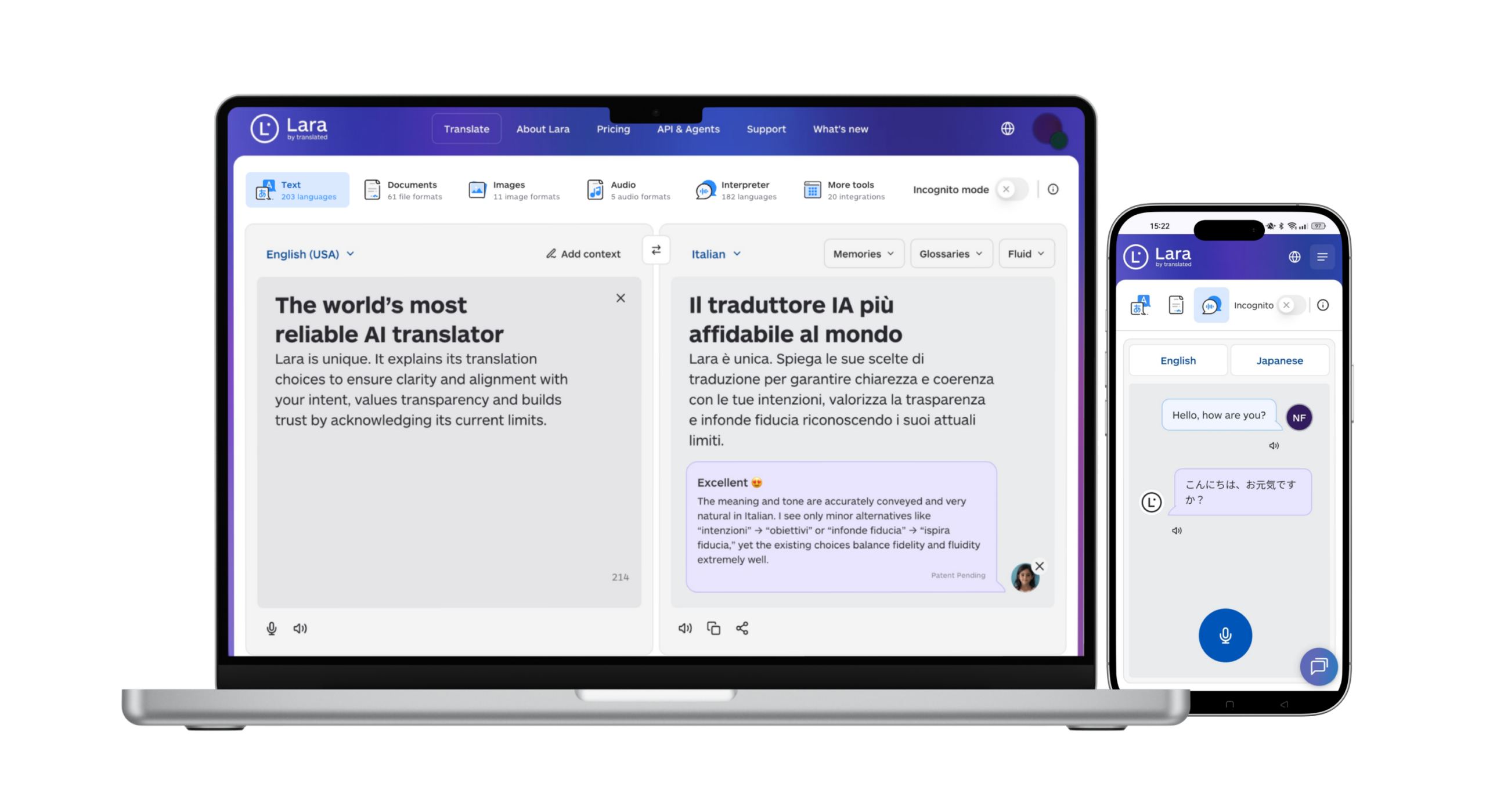
Keep company names, source links, dates, and numerical scores intact when preparing translated briefs. Have regional reviewers check terminology and any recommendation that could change how a sales team approaches an account.
Give regional teams a clearer next step
Translate the context behind an account score so teams can review the same evidence in their preferred language.
Conclusion
Choose the platform that improves a specific decision and fits the way your team works. A focused pilot with representative data will reveal whether the signals are useful, the handoffs are reliable, and the resulting account insights help people take action across regions.
Have a valuable tool, resource, or insight that could enhance one of our articles?
Send us an email at press@laratranslate.com
We’ll be happy to review it and consider it for inclusion to enrich our content for our readers! ✍️
Frequently asked questions
What is AI GTM orchestration?
AI GTM orchestration connects account data, buying signals, and business rules to sales and marketing actions. A workflow might enrich an account, assess its fit, route it to an owner, and create a research brief or follow-up task. AI can help analyze the inputs, while the team defines the criteria and controls.
How is GTM orchestration different from revenue operations?
GTM orchestration is the coordination of data and actions across go-to-market tools; revenue operations is the broader function that manages revenue processes, systems, and measurement. A revenue operations team may use orchestration software alongside attribution, forecasting, and conversation intelligence tools.
How much do AI GTM orchestration platforms cost?
Costs depend on the scope of the platform, the number of users or accounts, and usage-based charges. For example, Salesmotion lists an Individual plan at $85/month, while Common Room lists Essential at $2,500/month billed annually. These plans serve different workloads, so compare included integrations, data allowances, implementation fees, and contract terms before using price to shortlist a tool.
How often should account data and lead scores be updated?
Update frequency should match how quickly a signal changes and how soon the team needs to act. A new buying signal may need a prompt refresh, while slower-changing company attributes may suit scheduled checks. Confirm source timestamps, connector schedules, and when updated data actually recalculates a score; two-way sync alone does not guarantee fresh or accurate information.
Can GTM orchestration software work with an existing CRM?
It can when the platform supports the required CRM objects, permissions, and write-back behavior. Before rollout, test field mapping, duplicate handling, record ownership, and error recovery with a small set of representative records. Also confirm whether the required connector is included in the plan.
How can global sales teams use AI-generated account insights across languages?
Translate the account narrative and recommended actions while preserving source links, entity names, dates, and scores. Use a shared glossary for sales stages and product terminology, then have regional reviewers check meaning and context. Lara Translate supports this translation step for account briefs and other documents.
This article is about
- How AI GTM orchestration connects account data, buying signals, and sales and marketing actions.
- The different roles of account prioritization, campaign attribution, conversation intelligence, and revenue forecasting.
- Why data refresh schedules, scoring transparency, and reliable CRM integration matter when evaluating a platform.
- How to compare platform costs, including usage allowances, implementation, and ongoing administration.
- How translated account briefs help global sales teams understand the evidence behind prioritization decisions.
Useful Links
This article was produced by the Lara Translate content team. Lara Translate is an AI translation platform built by Translated, with more than 25 years of professional translation experience. Revenue operations teams use Lara Translate to translate account insights and prioritization briefs accurately, across 200+ languages and 60+ file formats.