

The product spec was approved in March. It’s October, and the feature is still in the engineering backlog. Meanwhile, your biggest prospect wants an integration with their accounting system, marketing needs competitor pricing data nobody has time to collect, and investors keep asking when you’ll launch in Europe. Startup challenges rarely arrive one at a time. This guide is for founders, product managers, and small engineering teams who need to build faster and scale without hiring for every gap.
Below are six problems that slow startups down the most in 2026. For each one, you’ll see what breaks, why it happens, how to fix it, and which in-depth Lara Translate guide compares the tools.
|
TL;DR
|
1. Product and engineering are stuck in handoff limbo
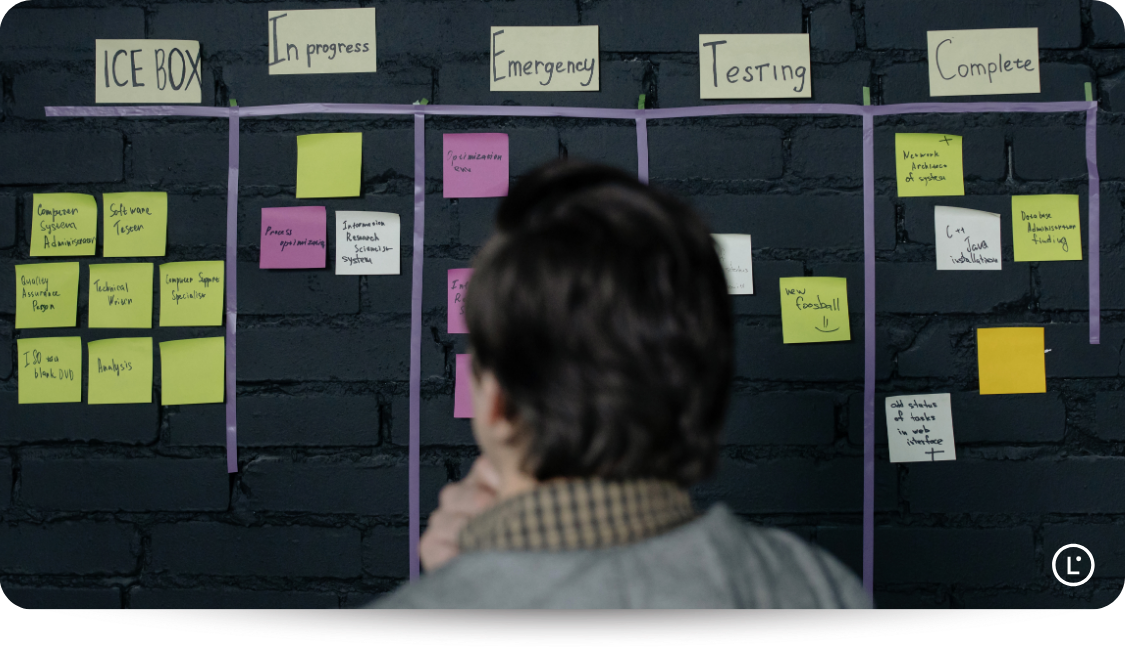
A product manager writes the spec, a designer mocks it up, and engineering adds it to the backlog. Three sprints later, it still hasn’t shipped, and the original idea has been rewritten twice in chat threads.
Why it happens. Every handoff between product, design, and engineering loses context and adds waiting time. Small engineering teams are always busy with something more urgent, so product decisions queue up for months.
How to fix it. Use AI tools to shorten the gap. Some let product managers build working prototypes to validate ideas before engineering touches them. Others generate code directly in your existing codebase for engineers to review. Pick based on what you need: a disposable prototype or production code. Keep engineering review in the loop, because it catches problems like hardcoded interface text that will be painful to translate later.
We compared 15 options in our guide to AI tools that close the product-to-engineering handoff gap.
2. Game development is slow and expensive
If your startup builds games or interactive experiences, you know the pain. Art, animation, dialogue, and level design each need specialists, and a small studio can spend a year getting to a playable demo.
Why it happens. Traditional game production depends on large teams and long pipelines. AI has made prototyping much faster and cheaper, so the bottleneck has moved: now it’s choosing the right tools and getting the finished game in front of players.
How to fix it. Use AI for the parts that eat the most time: 3D assets, textures, character dialogue, and early prototypes. Check that each tool exports to the engine and store you plan to release on. And plan localization from the start, because UI text, item names, and dialogue need translating while keeping each character’s voice.
Our review of AI game development tools for indie teams covers asset generation, AI characters, and full game builders.
3. Accounting integrations eat your roadmap
Your first customers used one accounting system. The next ten use five others. Each one needs its own authentication, data mapping, and maintenance, and the integration backlog starts growing faster than your actual product.
Why it happens. Every accounting platform has its own API, quirks, and update cycle. Building and maintaining each integration in-house is a recurring cost, not a one-off project.
How to fix it. Use a unified API that connects to many accounting systems through a single integration. Compare providers on which systems they cover, how deep their data models go, and how they handle write access and sync errors. Build directly only for the one or two integrations that are truly core to your product.
Our guide to unified API platforms for accounting integrations compares the main providers.
Ship your next release in more than one language
Translate your app’s JSON, PO, or Markdown files with Lara Translate, and keep your product terms consistent with a glossary.
4. Users expect calendar features you haven’t built
You host webinars, demos, or onboarding sessions. People register, then forget. Or your product schedules appointments, and users ask why they can’t add them to their own calendar in one click.
Why it happens. Calendar support sounds simple, but every calendar app handles invites and time zones a little differently. Building it properly takes engineering time that a small team rarely has.
How to fix it. Use an add-to-calendar tool or embeddable widget instead of building your own. Look for support across the major calendar apps, time zone handling, and updates that sync when an event changes. For marketing events, track how many registrants actually save the date.
See our comparison of add-to-calendar and calendar marketing tools.
5. You need data, but you have no developers to spare
Sales wants a list of companies from an industry directory. Marketing wants to track competitor pricing. Product wants to see how rivals describe a new feature. Every request ends up with the same answer: engineering doesn’t have time.
Why it happens. Custom scrapers need code, maintenance, and handling of site changes. For a startup, that’s rarely a priority, so useful data stays out of reach or gets copied by hand.
How to fix it. Use no-code scraping and monitoring tools that let non-technical teams collect public data and set alerts for changes. Test each tool on your real target pages first, estimate monthly costs based on actual usage, and respect each site’s terms of use.
Our guide to no-code web scraping and monitoring tools covers options from visual scrapers to developer APIs.

6. You want to go global, but your product only speaks one language
An investor asks about your European plan. A prospect in Brazil wants a demo in Portuguese. You look at your codebase and realize every button label, error message, and email template is hardcoded in English.
Why it happens. Startups build fast, and preparing a product for other languages always seems like a later problem. But every hardcoded string makes translation harder, and full localization can drain runway before you know whether a market will convert.
How to fix it. Separate interface text from code early, using standard resource files. Then validate new markets cheaply: translate a landing page and key emails, run small campaigns, and expand localization only where demand appears.
Lara Translate is built to fit into that workflow. The Lara CLI translates resource files such as JSON, PO, TS, Vue, Markdown, and Android XML from the terminal or a CI/CD pipeline, so new strings get translated as part of each release. Glossaries keep product names and technical terms consistent across 200+ languages, and Translation Memories reuse approved translations, so you only pay for what changed. For docs, decks, and contracts, document translation keeps the original layout intact. Teams that want to build translation into their own product can use the API and SDKs.
For a step-by-step plan, read our localization validation framework for startups.
Startup challenges and solutions at a glance
| Problem | Solution | Read more |
|---|---|---|
| Product-engineering friction | AI prototyping and code generation | Handoff tools |
| Slow game development | AI assets, characters, and prototypes | AI game dev tools |
| Accounting integrations | One unified API | Unified API platforms |
| Missing calendar features | Add-to-calendar widgets | Calendar tools |
| Data without developers | No-code scraping and monitoring | Scraping tools |
| Product in one language | Resource files plus AI translation | AI translation for startups |
Test a new market before you commit the runway
Translate a landing page, a pitch deck, and your onboarding emails in minutes, then scale only where demand shows up.
The bottom line
The startups that scale fastest rarely build everything themselves. They spend engineering time on what makes the product different and buy the rest: integrations, calendar features, data collection, and translation. Pick the challenge slowing you down the most right now, fix it with the right tool, and protect your roadmap for the work only your team can do.
Have a valuable tool, resource, or insight that could enhance one of our articles?
Send us an email at press@laratranslate.com
We’ll be happy to review it and consider it for inclusion to enrich our content for our readers! ✍️
FAQ
What are the biggest challenges startups face when scaling a product?
The biggest challenges startups face when scaling a product are slow handoffs between product and engineering, integrations that eat roadmap time, commodity features that distract from the core product, limited access to data, and preparing the product for new markets and languages. Most come down to limited engineering capacity.
Should a startup build or buy integrations?
Buy integrations that are standard for your market, such as accounting or calendar connections, through a unified API or ready-made tool. Build directly only when an integration is central to what makes your product different.
Can product managers build features with AI?
Product managers can use AI tools to build working prototypes and validate ideas quickly. Shipping to production should still go through engineering review for security, performance, and code quality.
When should a startup start localizing its product?
Prepare your code for localization early by keeping interface text in resource files, even before you translate anything. Start translating once you’re ready to test a specific market, beginning with a landing page and key emails.
How can startups translate their app without a localization team?
Use an AI translation tool that works with resource files and fits into your release process. Lara Translate’s CLI translates formats like JSON and PO in CI/CD pipelines, with glossaries for consistent terminology across 200+ languages.
This article is about
- The six challenges that slow startups down most when building and scaling a product in 2026.
- How AI tools shorten the handoff between product and engineering.
- Why unified APIs and ready-made widgets save engineering time on integrations and calendar features.
- How no-code scraping gives non-technical teams access to the data they need.
- How Lara Translate helps startups localize products with the Lara CLI, glossaries, and Translation Memories.
- Which in-depth Lara Translate guide to read next for each challenge.
Sources
This article was produced by the Lara Translate content team. Lara Translate is an AI translation platform built by Translated, with more than 25 years of professional translation experience. Startups use Lara Translate to localize products, docs, and go-to-market content as they expand, across 200+ languages and 60+ file formats.