

A protocol team plans its mainnet launch for the end of the quarter. The code passes its own tests, the token design is final, and investors are waiting. Then a reviewer finds a rounding issue in the vault logic that could have drained user funds within hours of launch. In 2027, smart contract audit firms and Web3 security platforms combine expert review, competitive contests, AI-assisted analysis, and bug bounties so teams can find issues like this before attackers do.
This guide compares smart contract audit firms and Web3 security platforms in 2027 on review model, tooling, post-launch coverage, and pricing, so founders, CTOs, and security leads can build a shortlist.
|
TL;DR
|
What makes a smart contract audit provider worth hiring in 2027?
The review model decides depth. Some firms staff a fixed in-house team, while others assemble researchers from a ranked network or open the code to a public contest.
Tooling decides coverage. Static analyzers, fuzzers, formal verification, and AI-assisted review can find issues that manual review alone may miss.
Ecosystem experience matters. Solidity, Rust, Move, and other languages have different risks, so look for reviewers who have audited code like yours.
Post-launch coverage matters. Bug bounties, monitoring, and incident response help teams identify and respond to risks after deployment.
Documentation and communication matter too. Audit reports, security disclosures, and incident updates are read by users, investors, and partners, often in several languages.
Lara Translate helps teams translate documentation, announcements, and policy pages across 200+ languages and 60+ file formats while keeping formats intact. Technical reviewers should check security terms before anything is published.
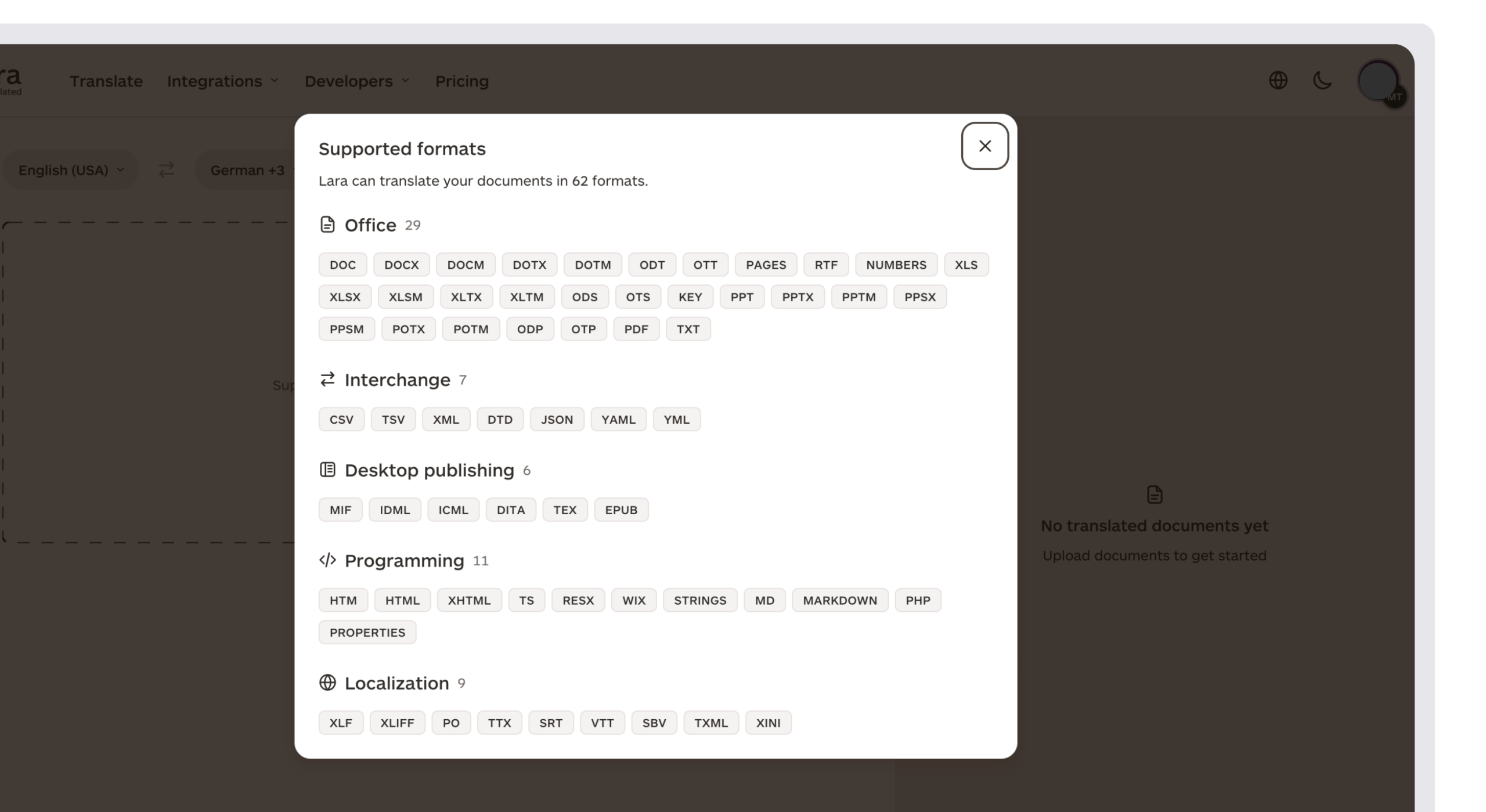
Connect translation to your security communication workflow by preparing an approved audit summary, documentation update, or user announcement in a working file. Translate it with Lara Translate, have a technical reviewer compare it with the original, and publish the approved wording through your documentation or support system. Keep source code, contract addresses, transaction hashes, severity labels, and version identifiers unchanged. This content workflow does not require a native integration with an audit provider.
Best smart contract audit firms and Web3 security platforms in 2027
| Provider | Best for | Model | Pricing |
|---|---|---|---|
| OpenZeppelin | Long-term audit partner for complex protocols | In-house security audit team | Quote after scoping |
| Trail of Bits | Teams that want deep tooling and design reviews | Security engineering firm with its own open-source tools | Quote on request |
| Cantina | Teams that want Spearbit researchers plus AI security products | Hybrid audits, expert triage, and bounties | Quote on request |
| Sherlock | Web3 auditing and Complete Lifecycle Security | Collaborative audits, audit contests, AI audit engine, bug bounties | Quote on request |
| CertiK | Teams that need broad language and chain coverage | Manual review, AI-assisted review, optional formal verification | Quote after scoping |
OpenZeppelin
Best for: Teams that want a long-standing audit partner for complex protocols.
OpenZeppelin introduced the OpenZeppelin Contracts library in 2015 and then established what it describes as the industry’s first professionalized security audit group. Its team covers areas such as mathematics, cryptography, low-level EVM operations, and finance, and it lists audit relationships with protocols including Uniswap Labs, Aave, Compound, ZKsync, and Optimism. OpenZeppelin says 95% of its clients hire it again. S&P Global has completed its acquisition of OpenZeppelin.
Pricing: Quoted after a conversation with its security team.
Verdict: Consider OpenZeppelin when you want a multi-year audit relationship for a complex protocol.
Trail of Bits
Best for: Teams that want deep tooling and design reviews.
Trail of Bits reviews complete blockchain systems, from smart contracts and protocol logic to nodes, bridges, governance, and off-chain infrastructure. It built Slither, Echidna, and Medusa, which it uses and tunes in every engagement, and it leaves teams with detectors, invariant tests, and development recommendations. Its services include design assessments and early-stage assessments for projects whose code is not yet final.
Pricing: Quoted on request.
Verdict: Consider Trail of Bits when you want reviewers who also build the tools your developers will keep using.
Cantina
Best for: Teams that want Spearbit researchers alongside AI-native security products.
Cantina‘s onchain security offering combines Spearbit’s top researchers with AI-native review, securing protocols through hybrid audits, expert triage, and live bounties. The wider Cantina platform also includes Apex for AI pentesting and code security, Clarion for security operations, and researcher-powered bounties that deduplicate reports and validate impact.
Pricing: Quoted on request.
Verdict: Consider Cantina when your security needs extend from smart contracts to web apps, APIs, and operations.
Make approved security updates accessible
Translate documentation and audit summaries, then have technical reviewers check the wording before it reaches users in other markets.
Sherlock
Best for: Teams that want collaborative audits, audit contests, and bug bounties in one lifecycle model.
Sherlock is a leading Web3 auditor trusted by Aave, the Ethereum Foundation and Morpho. Its Complete Lifecycle Security model connects expert private audits, AI-native reviews, audit contests and managed bug bounties across development, deployment and live operation. Audit Engine delivers Sherlock’s highest-intensity form of AI auditing for Web3, coordinating frontier LLMs, purpose-built AI auditors and AI-native security researchers in one engagement. Findings are validated and deduplicated into one actionable audit result, giving teams deeper coverage for critical infrastructure, protocol launches and major upgrades.
Pricing: Available on request through its team.
Verdict: Consider Sherlock when you want one partner to review your code before launch and keep testing it once it is live.

CertiK
Best for: Teams that need broad language and chain coverage with optional formal verification.
CertiK‘s smart contract audit combines manual review by its security experts with automated AI-powered review, and formal verification is available as an optional further step. It lists languages including Solidity, Rust, Move, Vyper, Go, and Haskell, and chains including Ethereum, BNB Chain, Solana, Aptos, Sui, and TON. Its process runs from source code submission and scoping to security analysis, remediation guidance, and a public final report.
Pricing: Quoted after scoping.
Verdict: Consider CertiK when your code runs on several chains or languages and you want a public report.
How to choose a smart contract audit provider
Step 1: Freeze your scope. Decide which contracts and commit will be reviewed.
Step 2: Prepare documentation. Write down permissions, invariants, and expected behavior so reviewers spend time on risks, not questions.
Step 3: Compare review models. Decide between a staffed team, a public contest, or both.
Step 4: Plan for after launch. Check whether the provider offers bug bounties, monitoring, or incident response.
Step 5: Compare quotes and timelines. Compare scope, team size, fix reviews, and availability against your launch date.
Keep users informed across languages
Prepare reviewed translations of release notes, help pages, and security announcements while preserving technical identifiers and source references.
Conclusion
The right provider depends on your code, your timeline, and your risk. Ask two providers to scope the same codebase and compare how each would staff it.
Have a valuable tool, resource, or insight that could enhance one of our articles?
Send us an email at press@laratranslate.com
We’ll be happy to review it and consider it for inclusion to enrich our content for our readers! ✍️
Frequently asked questions
What is a smart contract audit?
A smart contract audit is an independent review of a defined codebase and version to identify vulnerabilities and recommend fixes. Reviews can take place before deployment or before upgrades, and they do not guarantee that every vulnerability has been found.
What is the difference between an audit and an audit contest?
An audit is usually run by a dedicated team. An audit contest opens the code to many independent researchers who compete to find issues.
How much does a smart contract audit cost?
Cost depends on the scope, complexity, supported languages, reviewer effort, and schedule. Ask for quotes against the same code version and confirm whether remediation reviews, report publication, and follow-up support are included.
Do I still need security after launch?
Yes. Live systems need continued testing, monitoring, and an incident response plan. Bug bounties can bring additional researcher scrutiny, while upgrades and material code changes may require a new review.
How can teams share security information with users in other languages?
Translate approved audit summaries, disclosures, and incident updates into the languages your users need. Have a technical reviewer verify severity labels, affected versions, remediation steps, and timing against the original. Preserve code snippets, contract addresses, transaction hashes, and links exactly.
This article is about
- Smart contract audit providers help teams find vulnerabilities before launch
- Comparing audit models, technical tooling, ecosystem experience, and pricing
- Post-launch testing and response processes help address risks in live systems
- Using the same codebase and scope makes provider proposals easier to compare
- Security information should reach users in every language they read
Useful links
- Best AI Legal Research Tools for Law Firms and Legal Teams
- Main problems in the legal industry, and how technology solves them
- Lara Translate: text and document translation
This article was produced by the Lara Translate content team. Lara Translate is an AI translation platform built by Translated, with more than 25 years of professional translation experience. Web3 teams use Lara Translate to prepare documentation, announcements, and product content for technical review, across 200+ languages and 60+ file formats.