

A lawyer needs the leading decisions on a narrow question before a hearing, searches a database with keywords that almost match, and ends up reading forty cases to find three. AI legal research tools answer questions in plain language and point to the sources behind each answer, so the lawyer can check them.
This guide compares AI legal research tools for law firms and legal teams by source coverage, jurisdictions, citation checking, document workflows, and pricing. The aim is to help teams evaluate each tool against the law they practice and the sources they need to verify.
|
TL;DR
|
What makes an AI legal research tool worth using in 2026?
Sources and jurisdictions set the scope. Silex lists Swiss federal and cantonal law. For every platform, confirm the courts, legislation, commentary, historical coverage, and update frequency included in your subscription. A broad database does not mean every AI feature can use every source.
Citation tools help lawyers verify answers. Linked authorities and citators make checking easier, but they do not remove the need to read the source, assess its treatment, and confirm that it supports the proposition in the relevant jurisdiction.
Security and data handling differ. Silex lists hosting in Switzerland and zero retention. For other vendors, review the actual contract and security documentation for hosting, retention, access controls, subprocessors, and training use. A certification badge alone does not establish suitability for every matter.
Pricing varies by content and workflow. Silex publishes plans from CHF 149 per month excluding VAT. Elsewhere, compare published subscriptions with custom quotes and check whether research content, document storage, integrations, and API use are included.
Languages are rarely the whole picture. Silex accepts questions in French, German, Italian, and English. Separately check the languages supported for search, source documents, and generated answers on each platform. Contracts, filings, and foreign-language decisions may still need translation and review against the original.
AI legal research tools compared
Compare the content and capabilities included in each subscription, not just the platform price. Confirm jurisdiction coverage, seat limits, document allowances, integrations, and renewal terms.
| Provider | Best for | Model | Pricing |
|---|---|---|---|
| Lexis+ with Protégé | Firms that want research grounded in LexisNexis content | AI legal research assistant | Custom quote; trial available |
| CoCounsel Legal | Firms that already use Westlaw | AI legal assistant | Not listed |
| vLex Vincent AI | Teams that research across many countries | AI legal research platform | Demo or free trial |
| Harvey | Firms that want broad legal AI with agents and vaults | Legal AI platform | Demo; not listed |
| Silex | Swiss lawyers who research in French, German, Italian, or English | AI legal research platform | From CHF 149 per month; 7-day trial |
| Legora | Teams that want research with workflows and Word add-in | Legal AI platform | Demo; not listed |
| CaseMine | Teams that research US, UK, Irish, and Indian law | AI legal research platform | Separate pricing page |
| Midpage | Litigators who research US case law | AI legal research platform | Professional $100/seat/month before tax; two-week trial |
| Alexi | Firms that want a private AI environment | AI platform for law firms | Guided trial; not listed |
| Jus Mundi | Teams that research international law and arbitration | International law research platform | Free trial; not listed |
Lexis+ with Protégé
Best for: Firms that want research grounded in LexisNexis content.
Lexis+ with Protégé, formerly Lexis+ AI, combines conversational research, drafting, and analysis with LexisNexis content. Its capabilities include access to primary and secondary sources, Practical Guidance, and Shepard’s citations. Confirm the jurisdictions, source collections, document connections, and AI workflows included in the proposed subscription.
Pricing: Request a quote for the users, content access, and capabilities required. A trial is available; confirm its duration and scope when requesting access.
Verdict: Consider Lexis+ with Protégé when research grounded in LexisNexis content with citation checks matters.

CoCounsel Legal
Best for: Firms that already use Westlaw.
CoCounsel Legal is Thomson Reuters’ legal AI offering, connecting research and document workflows with Westlaw and Practical Law. It supports tasks such as analysis, drafting, and working with matter documents. Confirm which research sources, integrations, and document limits are included in the selected package.
Pricing: Request current plan pricing for your organization and required content. Confirm whether existing Westlaw or Practical Law access, integrations, and additional capabilities affect the quote.
Verdict: Consider CoCounsel Legal when research grounded in Westlaw and Practical Law matters.
vLex Vincent AI
Best for: Teams that research across many countries.
vLex Vincent AI supports legal research, litigation, and transactional workflows using the vLex legal database. Its international content makes jurisdiction and collection selection important: check the particular courts, source types, languages, and dates covered by your subscription and by the AI workflow you intend to use.
Pricing: Request a quote for the jurisdictions, users, and AI capabilities required. Demo and trial options are available.
Verdict: Consider vLex Vincent AI when research across many countries matters.
Harvey
Best for: Firms that want broad legal AI with agents and vaults.
Harvey combines legal AI agents, document analysis through Vault, legal and regulatory research through Knowledge, and collaboration through Spaces. Its broader product range also supports regulatory monitoring and connected workflows. Review the sources and permissions available to each product, along with the contractual terms for your deployment.
Pricing: Request a quote for the products, users, document volumes, and integrations in scope.
Verdict: Consider Harvey when a broad legal AI platform with shared workspaces matters.
Silex
Best for: Swiss lawyers who research in French, German, Italian, or English.
Silex is an AI legal research platform for Swiss law. Its offering includes natural language questions answered with checkable citations from Swiss federal and cantonal law, decisions, and doctrine, with data hosted in Switzerland, not used to train AI models, and zero retention. Questions can be asked in French, German, Italian, or English, and the site is available in the same four languages.
Pricing: Solo is CHF 149 per month, Team CHF 490, and Enterprise CHF 895, excluding VAT, with a 7-day free trial.
Verdict: Consider Silex when research on Swiss law in four languages with Swiss hosting matters.
Prepare foreign-language documents for legal review
Use Lara Translate to prepare translations of contracts, filings, and decisions, then have a qualified legal professional check them against the original.
Legora
Best for: Teams that want research with workflows and a Word add-in.
Legora combines research, document review, drafting, and workflow automation with interfaces such as Word and Outlook add-ins. Its product range includes agents, tabular review, and collaboration tools. Confirm the research sources, integrations, access controls, and data-handling terms available in the proposed package.
Pricing: Request a demo and quote covering users, research access, document processing, integrations, and any usage limits.
Verdict: Consider Legora when research connected to workflows and Word matters.
CaseMine
Best for: Teams that research US, UK, Irish, and Indian law.
CaseMine offers AMICUS AI for research and drafting, CaseIQ for finding authorities from uploaded documents, and Parallel Search for concept-based case research. Its regional offerings cover US, UK, Irish, and Indian legal materials. Confirm the courts, source types, and subscription region needed for your work.
Pricing: Check the regional pricing page for the applicable plan and currency. Compare research access, AMICUS AI credits, document limits, and renewal terms before subscribing.
Verdict: Consider CaseMine when research across US, UK, Irish, and Indian courts matters.
Midpage
Best for: Litigators who research US case law.
Midpage supports research across US case law, statutes, and regulations, with an AI citator and tools for research and drafting. It is available through its own platform and connections to other AI products, including Claude, ChatGPT, and Perplexity. Confirm the underlying source coverage and the separate terms of any connected AI service.
Pricing: Professional is $100 per seat/month billed monthly, before tax, with a two-week free trial. A $25/month student and faculty plan requires US law-school eligibility. API access is not included in these plans, and usage conditions apply.
Verdict: Consider Midpage when US case law research with a citator matters.
Alexi
Best for: Firms that want a private AI environment.
Alexi offers a law-firm AI environment for research, drafting, analysis, and workflow automation. Its capabilities include single-tenant deployment and using a firm’s playbooks, templates, and prior work. Confirm the legal sources, integration scope, hosting configuration, and learning or retention settings for the proposed deployment.
Pricing: Request a consultation and quote for the deployment, users, integrations, and services required. A guided trial is offered.
Verdict: Consider Alexi when a private, single-tenant AI environment matters.

Jus Mundi
Best for: Teams that research international law and arbitration.
Jus Mundi focuses on international law and arbitration research. Its Jus AI assistants support arbitration-related research and document work using the platform’s specialist sources. Confirm the awards, decisions, commentary, source-access rights, and AI capabilities included in the package rather than assuming all materials are publicly accessible.
Pricing: Request current subscription and Jus AI pricing for your team, including source access and usage allowances. Confirm available trial terms with the provider.
Verdict: Consider Jus Mundi when international law and arbitration sources matter.
How to choose an AI legal research tool
- List your jurisdictions. Write down the countries, states, and courts you research, and confirm each tool lists coverage for them.
- Test the citations. Ask each tool a question you already know the answer to and check that every cited source exists and supports the answer.
- Review data handling. Read where data is hosted, how long it is kept, and whether it is used to train models, and compare this with your confidentiality duties.
- Compare the full price. Ask for the cost per seat, credits, storage, and renewal terms in writing, since most vendors quote through sales.
- Plan for languages. Decide which languages your sources, clients, and filings use, and who translates and reviews documents outside the tool.
Connect your legal document workflow with Lara Translate
Use Lara Translate alongside your research platform to translate contracts, filings, foreign-language decisions, and research notes. Export an authorized copy in a supported format or copy the relevant text, add context and terminology, and keep the reviewed translation linked to its original source. Preserve citations, case numbers, clause references, dates, and defined terms.
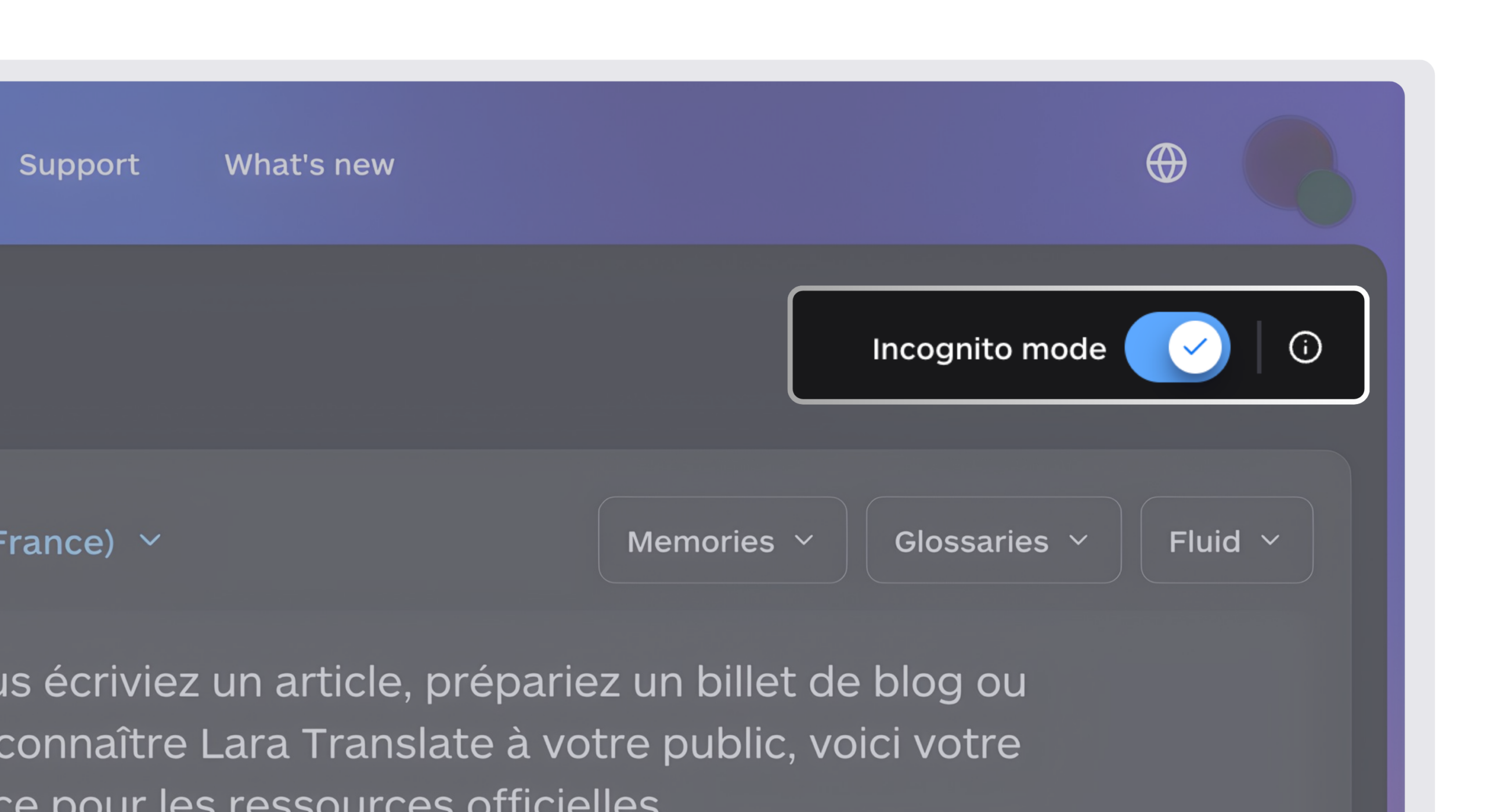
Use your firm’s approved data-handling process for confidential material and have a qualified legal professional verify the translation before relying on it. This document workflow does not assume a native integration or replace checking the authoritative legal text.
Keep multilingual matter documents aligned
Translate approved document updates with Lara Translate, then review terminology and references against the current source version.
Conclusion
The right tool depends on your jurisdictions, your confidentiality duties, and how you like to verify sources. Shortlist two or three and test each on a question you already know the answer to.
Have a valuable tool, resource, or insight that could enhance one of our articles?
Send us an email at press@laratranslate.com
We’ll be happy to review it and consider it for inclusion to enrich our content for our readers! ✍️
Frequently asked questions
What is AI legal research?
AI legal research uses language models to answer legal questions in plain language and to find relevant statutes, cases, and commentary, usually with citations to the underlying sources.
Can AI legal research tools invent citations?
Language models can produce incorrect or invented references, so lawyers should open every cited source and confirm it supports the answer. Tools that link answers to their sources and offer citation checks make verification easier.
How is AI legal research different from a traditional legal database?
A traditional database relies on keyword and filter searches across documents. AI tools accept natural language questions and summarize findings, but the underlying documents and citations still need professional review.
What should lawyers check about confidentiality in AI tools?
Check where data is hosted, how long it is retained, whether it is used to train models, and who can access it, and compare these with professional secrecy and data protection duties in your jurisdiction.
How does legal research work in multilingual jurisdictions?
Countries with several official languages publish laws and decisions in more than one language, so a tool should accept questions and return sources in the languages your team reads, and lawyers should check the official version.
How do you translate legal documents for research and review?
Prepare a translation linked to the original document, preserve citations, clause numbers, dates, and defined terms, and have a qualified legal professional review meaning in context. Check the receiving court or authority’s requirements before using a translation for an official submission.
This article is about
- AI legal research tools answer legal questions in plain language and point to sources a lawyer can check
- How jurisdiction, source coverage, and update frequency affect AI-assisted legal research
- Why linked citations and citators still require professional verification of authorities
- How content access, seats, usage allowances, and data-handling terms affect purchasing decisions
- How translated research documents support multilingual review while preserving source traceability
Useful links
- Main problems in the legal industry, and how technology solves them
- AI Translation for Legal and Medical Documents: Liability, Accuracy, and When Human Review Is Non-Negotiable
- Lara Translate: text and document translation
This article was produced by the Lara Translate content team. Lara Translate is an AI translation platform built by Translated, with more than 25 years of professional translation experience. Legal teams use Lara Translate to prepare contracts, filings, and decisions for professional review, across 200+ languages and 60+ file formats.