

An altered bank statement can look convincing: steady deposits, a familiar employer, and balances that appear plausible. For lenders, the challenge is finding evidence of manipulation before that document shapes an underwriting decision.
AI document fraud detection tools examine bank statements, pay stubs, tax returns, and other application files for signs of tampering or fabrication. This guide compares tools for different review needs and explains how translation can help teams understand foreign-language documents alongside authenticity checks.
|
TL;DR
|
What makes an AI document fraud detection tool worth using in 2026?
Case-level reasoning and file-level review catch different kinds of fraud. Inscribe cross-references information across every document in the same application, while tools built around single-document parsing may miss inconsistencies that only appear when files are compared against each other.
Different detection methods reveal different issues. Image analysis can flag visual edits, metadata inspection can identify suspicious file creation patterns, and content checks can uncover inconsistent amounts or dates. Koncile combines these approaches; ask each vendor which checks apply to your document types.
Speed and coverage should be tested together. ClearStaq advertises bank statement parsing across 900+ formats and processing in under five seconds. Those are vendor claims about its workflow, and its advertised parsing accuracy should be evaluated separately from fraud detection performance.
Document authenticity, identity verification, and anti-money-laundering screening answer related questions. Define which gap you need to address, and confirm whether a proposed tool covers that task. For international applications, ask about both file-level analysis and understanding of the document’s language.
Compare AI document fraud detection tools
Prices were checked in September 2026. Published monthly prices below use monthly billing; compare included features and usage allowances before choosing.
| Tool | Best for | Category | Pricing |
|---|---|---|---|
| Koncile | Finance and risk teams wanting semantic analysis layered on top of pattern detection. | Document fraud detection | Custom Enterprise quote |
| Resistant AI | Organizations wanting enterprise-grade document forensics purpose-built for financial fraud. | Document fraud detection | Custom, contact sales |
| ClearStaq | Fintech lenders and MCA brokers wanting fraud detection built directly into fast document parsing. | Document fraud detection for lenders | StaqPro with StaqGuard: $249/month |
| Inscribe | Agentic, case-level reasoning across every document in an application | Document fraud detection platform | Custom, contact sales |
| Mitek | Organizations wanting established document and identity verification heritage. | Document and identity verification | Custom, contact sales |
| ABBYY | Organizations wanting document processing depth alongside fraud detection capability. | Document processing and fraud detection | Contact sales |
| Veryfi | Teams focused specifically on expense reimbursement fraud. | OCR and fake document detection | Starter: $500/month minimum; fraud add-ons extra |
| Attestiv | Organizations needing broader digital media and document authenticity verification. | Media and document authenticity | Contact sales |
| Ocrolus | Lenders wanting document extraction, financial analysis, and dedicated fraud detection in one workflow. | Document intelligence and fraud detection | Custom quote |
| VerifyPDF | Teams needing verification focused specifically on PDF document integrity. | PDF verification tool | Basic: $19/month; Professional: $99/month |
AI document fraud detection tools for lenders in 2026
Koncile
Best for: Finance and risk teams wanting semantic analysis layered on top of pattern detection.
Koncile combines image analysis, metadata inspection, and contextual consistency checks for document fraud detection. Its checks examine both how a file was produced and whether the content fits its business context, including financial documents such as invoices and pay stubs.
Pricing: Custom Enterprise quote, billed per page or image according to volume and the detection models enabled.
Verdict: Consider Koncile when semantic understanding of document content, not just visual or metadata pattern matching, matters most.
Resistant AI
Best for: Organizations wanting enterprise-grade document forensics purpose-built for financial fraud.
Resistant AI is consistently grouped alongside Inscribe and Koncile as one of the platforms genuinely built for detecting forged invoices, altered bank statements, and manipulated financial documents, rather than adapted from a broader document-processing tool. Resistant AI describes its Document Forensics technology as language-agnostic, with support for PDFs and images.
Pricing: Custom, contact sales.
Verdict: Consider Resistant AI when enterprise-scale forensic document analysis is the core requirement.

ClearStaq
Best for: Fintech lenders and MCA brokers wanting fraud detection built directly into fast document parsing.
ClearStaq combines bank statement and tax return parsing with financial analysis and fraud checks. Its official pages describe 27 fraud signals, including structural, metadata, and consistency checks. Evaluate its fraud detection on your own samples separately from its advertised parsing accuracy.
Pricing: StaqCore is $99/month with basic structural fraud flags. StaqPro is $249/month and includes StaqGuard AI fraud detection. StaqScale is $699/month. Monthly billing prices; credit limits and overage charges apply.
Verdict: Consider ClearStaq when processing speed and format coverage matter as much as fraud-signal depth.
Inscribe
Best for: Risk and underwriting teams wanting agentic, case-level reasoning across every document in an application.
Inscribe, founded in 2017 by twin brothers Ronan Burke and Conor Burke and headquartered in San Francisco with an engineering team in Dublin, has raised approximately $38.6 million across five funding rounds, including a $25 million Series B led by Threshold Ventures. The platform, which the company describes as having helped create the document fraud detection category, shifted to an agentic model across 2024 and 2025, with AI agents that analyze formatting, structure, metadata, and contextual cues while cross-referencing information across every document in the same application, and added a dedicated detector for AI-generated documents in 2025. Inscribe’s own 2026 report found fraud signals in 1 of every 16 documents reviewed, and its customers include BlueVine, Petal, Fair, and Ramp.
Pricing: Custom, contact sales.
Verdict: Consider Inscribe when reasoning about an application as a whole case, not just individual files, matters most, particularly for North American risk and underwriting teams.
Mitek
Best for: Organizations wanting established document and identity verification heritage.
Mitek combines identity document verification with biometrics and liveness capabilities. Its template-attack detection targets repeated patterns in forged identity documents. Confirm the specific support required for bank statements and other financial evidence when evaluating it for lending.
Pricing: Custom, contact sales.
Verdict: Consider Mitek when a long-established vendor track record in document verification matters for procurement.
Read international applicant documents with confidence
Lara Translate helps your team understand foreign-language documents. Review translations alongside the original files and your fraud-analysis findings.
ABBYY
Best for: Organizations wanting document processing depth alongside fraud detection capability.
ABBYY combines OCR, document classification, and data extraction with validation workflows and forensic partner integrations. Its document fraud detection offering includes integrations with specialist providers, which can suit teams that need broader document automation alongside fraud screening.
Pricing: Contact sales for document processing and the required fraud-detection integrations.
Verdict: Consider ABBYY when document processing needs extend well beyond fraud detection into broader OCR and data extraction workflows.
Veryfi
Best for: Teams focused specifically on expense reimbursement fraud.
Veryfi offers receipt and invoice extraction alongside a Fraud Detection Suite that examines document, image, data, and device signals. Its products also advertise AI-generated document detection. The Fraud Suite is a premium capability requiring activation beyond standard API access.
Pricing: The Starter platform has a $500/month minimum commitment. Fraud Detection and GenAI Detector are listed as add-ons; contact sales for their pricing.
Verdict: Consider Veryfi when expense and receipt fraud, rather than lending document fraud, is the primary concern.
Attestiv
Best for: Organizations needing broader digital media and document authenticity verification.
Attestiv analyzes the authenticity of documents and digital media. Its document analysis service checks PDFs, scanned or photographed documents, and embedded images, with heatmaps highlighting possible text modifications.
Pricing: Contact sales for document analysis and any additional media verification requirements.
Verdict: Consider Attestiv when authenticity verification needs to cover media formats beyond standard financial documents.
Ocrolus
Best for: Lenders wanting document extraction, financial analysis, and dedicated fraud detection in one workflow.
Ocrolus offers a dedicated product, Detect, which combines forensic inspection powered by Resistant AI with Ocrolus content checks. Its documentation describes authenticity classifications, reason codes, and visual evidence to help reviewers investigate suspicious documents.
Pricing: Custom pricing based on document type, extraction requirements, volume, and contract terms. Confirm which Detect capabilities are included.
Verdict: Consider Ocrolus when lending document extraction and financial analysis need to work alongside dedicated fraud detection.

VerifyPDF
Best for: Teams needing verification focused specifically on PDF document integrity.
VerifyPDF examines PDF metadata, document structure, content streams, and traces of editing. Teams can use its dashboard for manual review or access the API through a plan that includes programmatic verification.
Pricing: Basic is $19/month for 150 verifications; Professional is $99/month for 1,000 verifications and API access. With annual billing, the monthly equivalents are $15 and $79. Corporate pricing is custom.
Verdict: Consider VerifyPDF when PDF-specific integrity verification is the core requirement rather than broader financial document fraud analysis.
How to choose the right AI document fraud detection tool
Confirm what the tool detects. Ask vendors to demonstrate checks on altered figures, suspicious file structure, and fabricated content. Evaluate the evidence behind each flag.
Decide whether case-level or file-level analysis fits your review process. Inscribe’s agentic model cross-references every document in an application; other tools may review files more independently.
Match document coverage to your pipeline. Test native PDFs, scans, photos, local bank formats, and the languages your applicants use. Record both missed fraud and legitimate documents incorrectly flagged.
Check integration and total cost. Include extraction, fraud add-ons, usage limits, and review time in the comparison. Confirm how document screening fits with your identity verification and compliance processes.
How translation supports foreign-language document review
Some forensic tools already analyze documents across languages. Resistant AI describes language-agnostic document forensics, so translation is not a universal prerequisite for authenticity checks. Ask vendors to explain the difference between file-level analysis and support for extracting and understanding content in specific languages.
Lara Translate supports translation across 200+ languages and 60+ file formats. Risk and underwriting teams can use it to prepare readable translations of bank statements, pay stubs, business filings, and supporting correspondence.
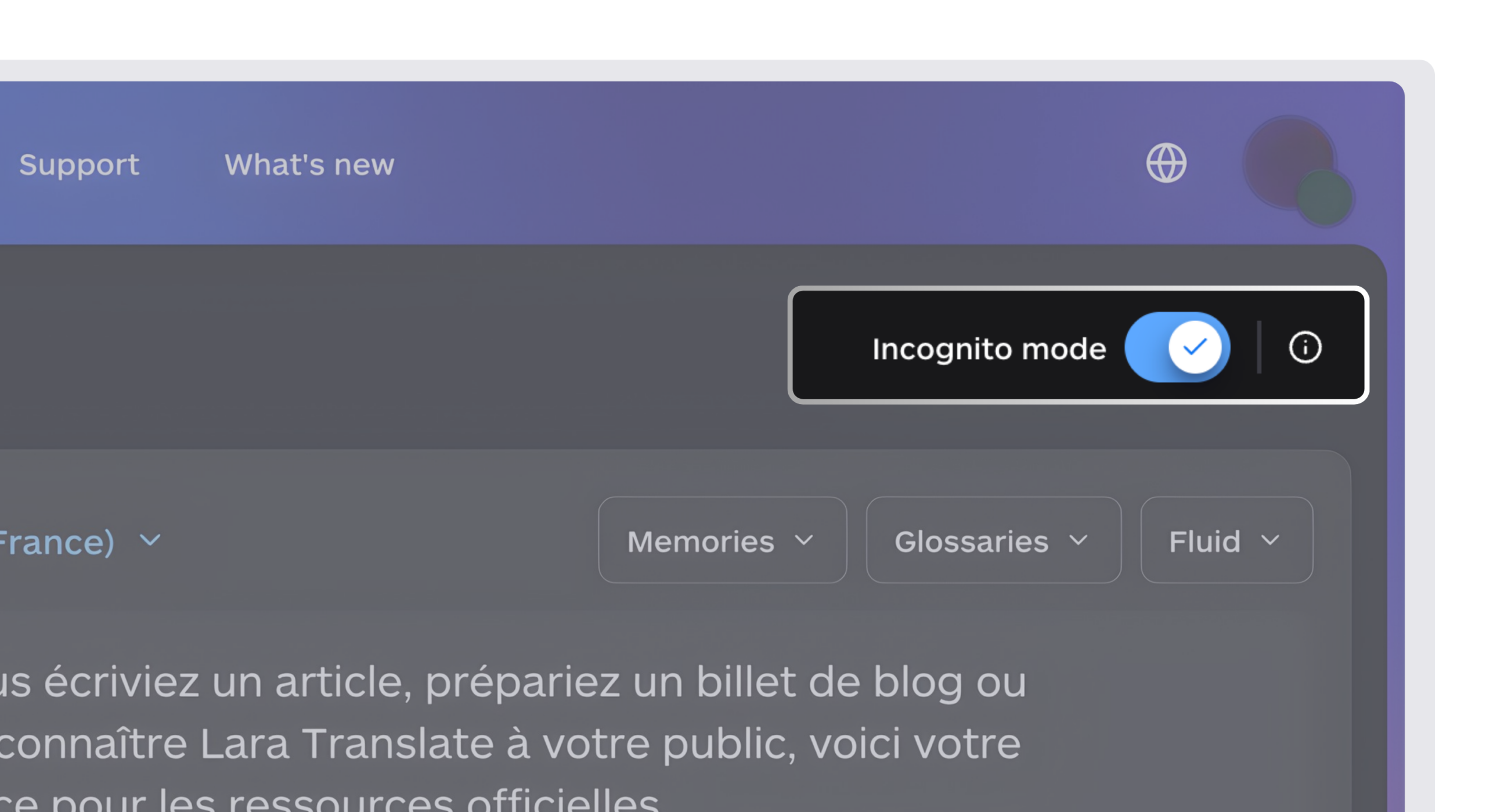
For review workflows, keep the original submission and use a separate translation as a reading aid. This recommendation follows from the metadata and file-structure checks described by fraud-detection vendors: a translated export is a new file and may have different forensic properties. Compare important amounts, dates, and names against the original before relying on the translation.
Make language part of your review workflow
Use Lara Translate to translate international applicant documents, then bring the original files, translations, and fraud findings together for review.
Conclusion
Choose the platform that produces useful evidence on the documents your applicants actually submit. A focused pilot should show what the tool detects, where human investigation remains necessary, and how it fits your review process. For international applications, include language support while retaining the original evidence.
Have a valuable tool, resource, or insight that could enhance one of our articles?
Send us an email at press@laratranslate.com
We’ll be happy to review it and consider it for inclusion to enrich our content for our readers! ✍️
FAQ
What is the best AI document fraud detection tool in 2026?
The best fit depends on your review priorities. Compare Koncile and Resistant AI for document forensics, and ClearStaq and Ocrolus for lending workflows that combine extraction and fraud checks. Inscribe leads for agentic, case-level reasoning across every document in an application.
What’s the difference between document fraud detection and identity verification (KYC)?
Document fraud detection tools, like Inscribe or Koncile, focus specifically on whether a submitted document, a bank statement or pay stub, has been altered or fabricated. Identity verification and KYC platforms, like Alloy, Persona, or Sardine, focus on confirming who an applicant actually is, a related but distinct problem.
How much does document fraud detection software cost in 2026?
Pricing ranges from published subscriptions to custom enterprise quotes. VerifyPDF Basic costs $19/month on monthly billing, while ClearStaq StaqPro with StaqGuard costs $249/month. Check the included document allowance, fraud features, and add-on costs.
Can document fraud detection tools catch AI-generated fake documents?
Increasingly, yes. Inscribe added a dedicated detector for AI-generated documents in 2025, reflecting a broader shift in the category as generative AI makes convincing fake bank statements and pay stubs easier to produce than ever.
Why does language matter for document fraud detection?
Language matters when reviewers need to understand the content of an applicant’s documents. Some tools already perform language-agnostic forensic checks. A separate translation can help a reviewer interpret the content while the original file remains available for authenticity analysis.
Should a lender choose a document fraud tool or a broader identity and AML platform?
It depends on where the actual risk gap is. A document-specific tool like Inscribe or ClearStaq addresses document manipulation directly. A broader platform like Alloy or ComplyAdvantage addresses identity verification and AML compliance. Many lenders use both, since the risks they address are genuinely different.
This article is about
- Matching document fraud detection tools to financial documents, identity verification, and digital media review.
- Inscribe positions itself as a category pioneer, having shifted to an agentic, case-level reasoning model across 2024 and 2025 and adding AI-generated document detection in 2025
- Combining image analysis, metadata inspection, and content consistency checks.
- Separating extraction accuracy from fraud detection performance.
- Comparing subscriptions, fraud add-ons, and custom enterprise quotes.
- Using translations to support understanding while keeping original documents available for forensic analysis.
Useful Links
- Lara Translate: supported languages
- Lara Translate: supported file formats
- Translated: company history and founding
This article was produced by the Lara Translate content team. Lara Translate is an AI translation platform built by Translated, with more than 25 years of professional translation experience. Risk and underwriting teams can use Lara Translate to prepare translations of international applicant documents for review, across 200+ languages and 60+ file formats.