

The going full AI risks are not theoretical anymore. Companies are cutting human teams, replacing workflows with models, and discovering — often after the damage is done — that they scaled the wrong thing. Klarna went public about walking back its AI-first customer experience. Accenture is restructuring while simultaneously reporting strong AI services demand. The market is not confused. It is sorting.
What makes 2025 and early 2026 genuinely different is the structure underneath the noise. The biggest AI players are investing in each other while building escape routes from each other at the same time. Apple deepens its Gemini partnership while keeping ChatGPT as a fallback. Amazon is all-in on Anthropic and reportedly in talks to invest in OpenAI. Oracle is raising tens of billions for data center expansion tied to OpenAI infrastructure commitments. This is not a stable equilibrium. It is a system re-wiring under financial pressure, and the incentives at each layer point in different directions.
This article unpacks what is actually happening in the AI market, why “going full AI” is a risk pattern rather than a strategy, and what a more defensible approach looks like.
|
TL;DR
|
Short Answer
What is the going full AI risk? It is the pattern of replacing human judgment and review with full automation before you have confirmed that the AI output is reliable, differentiated, and cost-justified in that specific context. The risk is not that AI fails loudly. It is that it quietly degrades quality, trust, and differentiation until the damage is visible in metrics rather than in individual outputs.
Why it matters
Most companies approaching AI automation are asking the wrong question. The decision isn’t “how much AI can we use?” — it’s “where does AI reliably create value, and where does it silently destroy it?” The Klarna reversal, the FTC’s findings on cloud partnership lock-in, and the IMF’s bubble warning all point to the same conclusion. The companies that come out ahead won’t be the ones that automated the most. They’ll be the ones that built quality controls into the process from the start.
This article covers:
- What is driving the current AI market volatility and partnership chaos
- The three-layer structure that explains every major deal in AI right now
- Whether the AI market is in a bubble and what economists are saying
- The going full AI risk: what it looks like when automation subtracts value
- A four-question framework for evaluating any AI initiative
- Why translation and localization is a textbook case for hybrid AI design
The real structure behind the chaos: compute, models, and distribution
A useful way to read the market is as three layers:
- Compute (cloud infrastructure, chips, data centers)
- Models (frontier labs and their training and inference stacks)
- Distribution (devices, operating systems, productivity suites, social platforms, enterprise channels)
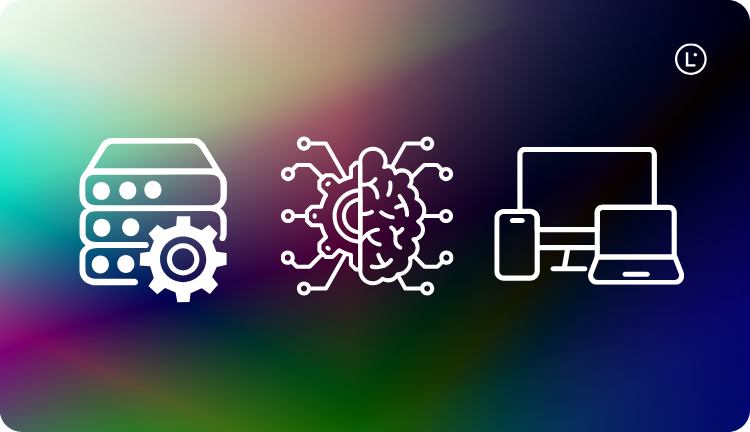
The biggest fights are happening at the seams between these layers. Here is what each major signal actually means.
1) Apple’s signal: distribution wins, and model partners can rotate
Apple’s decision to base the next generation of Apple Foundation Models on Google’s Gemini, while keeping ChatGPT as an opt-in option for complex queries, is a textbook distribution play. Apple cares about privacy, UX control, and negotiating leverage. Suppliers can change. That is the point.
Why that matters: if you’re all-in on one provider, you inherit their pricing, outages, and roadmap risk. Apple is explicitly engineering against that dependency. It’s worth watching what they build into their architecture, because enterprise teams face the same decision at a smaller scale.
2) OpenAI’s signal: capital intensity is now the story
Two headlines capture the shift. OpenAI is reportedly in talks for a massive new round involving Nvidia, Microsoft, and Amazon. At the same time, it is exploring chip alternatives because inference efficiency has become a bottleneck, not just training scale.
This is the uncomfortable truth: AI leaders are becoming infrastructure companies. That can work. But it changes the risk profile radically — when the core constraint is power, GPUs, and data centers, the “tech story” becomes a “capex story.”
3) The cloud partnership trap and why regulators care
The U.S. Federal Trade Commission published a staff report on AI partnerships and investments explaining how cloud deals with AI developers can include revenue sharing, equity rights, and terms that make switching providers structurally difficult.
Translation: the market can look competitive at the app layer, while becoming sticky and concentrated underneath. Switching costs can be engineered into partnerships before most buyers realize it is happening.
4) The investment cross-web: everyone backing everyone
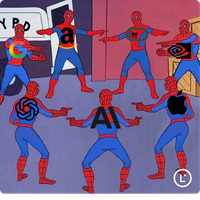 The current state looks like this:
- Amazon is deeply committed to Anthropic while being reported as a potential OpenAI investor too.
- Microsoft and OpenAI moved into a restructured partnership after years of tight coupling that attracted regulatory scrutiny.
- Oracle is raising large sums to fund data center expansion tied to OpenAI infrastructure commitments.
- Meta is committing tens of billions in capex, with leadership explicitly framing AI infrastructure as strategic, even as investors ask when the spend turns into durable margins.
This is why it feels like everyone is investing in and divesting from each other simultaneously. The system is re-wiring itself, and the incentives at each layer are not aligned.
Is AI a bubble? What economists are actually saying
The dot-com parallels
You can make a solid case for bubble dynamics. Valuations and expectations are running ahead of proven unit economics for many AI products. Infrastructure spend is front-loaded, while revenue and productivity gains are uneven and lagging. Investors are explicitly debating “AI bubble vs. durable platform shift” in mainstream financial media. That debate happening loudly in public is itself a signal.
The key difference
The IMF’s chief economist has said the AI investment boom could lead to a dot-com-style bust, but is unlikely to become a systemic financial crisis — partly because spending is more concentrated in cash-rich firms rather than highly leveraged structures.
A realistic scenario is not a banking-style collapse. It looks more like this:
- A painful repricing for the most overvalued parts of the stack (some chips, some model labs, many AI apps).
- Consolidation, with fewer vendors and more default providers emerging per category.
- A wave of AI projects that never made it to production getting quietly killed.
- Businesses that over-invested in automation without proving ROI getting squeezed on margins.
The bigger risk for most companies is not a macro crash. It is microeconomics: spending more on AI than the value it creates.
See how Lara Translate handles quality at scale
Test it on a real document. Bring your terminology, your context, your file format. See what a hybrid AI translation model actually does differently.
What is the going full AI risk for your business?
“Going full AI” usually means: minimize humans, maximize automation, ship faster. That sounds efficient. The trap is that you can absolutely scale output while destroying trust, differentiation, and customer experience at the same time.
Case signal: Klarna walking back its AI-first customer experience
Klarna’s CEO said the company went too far and is now hiring to ensure customers can always reach a human when they want to. That is a powerful public lesson: cost-cutting is not the same as value creation. Klarna did not fail at automation. It succeeded at automation and then discovered that success had a cost it hadn’t priced in.
Consulting pressure is real, but “AI replaced Accenture” is the wrong read
Accenture has reported strong demand for AI-related services while simultaneously running a restructuring to realign its workforce for digital and AI delivery. The takeaway is not that consulting is dying. It is more specific than that:
- Clients are reallocating budgets toward AI initiatives.
- Delivery expectations have shifted: faster, cheaper, more automated output is now table stakes.
- Firms that cannot prove measurable outcomes will get squeezed — not by AI itself, but by clients who now expect AI-level efficiency.
A framework for evaluating any AI initiative: four questions
Before committing to automation in any workflow, here’s a practical pressure-test you can apply. Most teams skip this. That is usually where the going full AI risk shows up six months later.
1) Value creation
Ask yourself:
- Does AI improve time-to-resolution, conversion, retention, or quality in a way you can measure?
- Or does it just increase output volume?
If you can’t connect the AI initiative to a metric that actually matters, you’re buying vibes and calling it strategy.
2) Quality and trust
Ask yourself:
- What is the real cost of a wrong output — to the customer, to compliance, to brand?
- Can you detect failure quickly, before it compounds?
- Is there a human override or review path where it counts?
If failure is expensive, you need review paths built into the workflow from day one. Not added later as a fix.
3) Differentiation
Ask yourself:
- If competitors use the same models, what makes your output meaningfully different?
- Are you building proprietary workflows, context, data, or expertise on top of the model layer?
If not, your “AI advantage” is a commodity the moment the next provider releases a cheaper API. That is not competitive moat — it is rented capability.
4) Dependency and pricing risk
Ask yourself:
- What happens if your provider doubles prices, introduces rate limits, or changes terms?
- Can you switch providers without rewriting your entire stack?
The FTC report is a direct reminder that switching costs can be engineered into AI partnerships before buyers recognize what is happening. Evaluate lock-in before you sign, not after.
Why human-centric is coming back — and it’s not about ethics
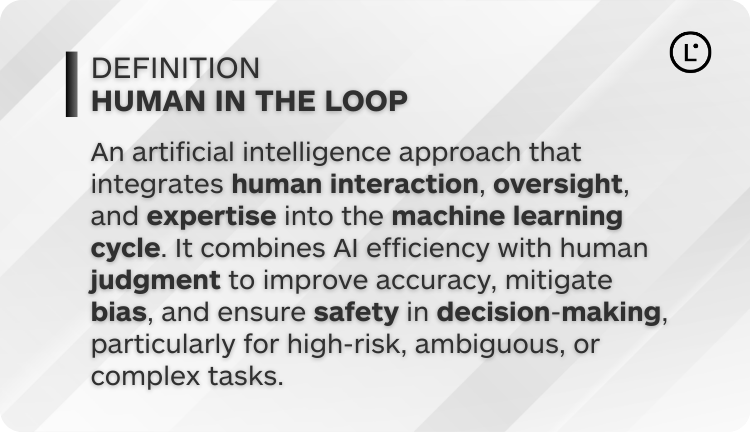
Human-centricity is not a moral trend. It is risk control.
The companies that perform well through the current AI correction are not necessarily the ones using the most AI. They tend to be the ones that use AI where it is reliable and highly leveraged, keep humans where mistakes are costly, brand-sensitive, or emotionally complex, and build workflows that scale quality rather than just volume. That pattern tends to survive market corrections better than full-automation bets, because it is grounded in output quality rather than cost reduction alone.
Translation as a case study: where full automation fails and hybrid models hold up
Translation is one of the clearest examples of where the going full AI risk surfaces quickly. The failure mode is not dramatic. It is cumulative: terminology drifts, brand voice becomes inconsistent, a legal term gets rendered incorrectly in a target market, a document loses its formatting structure. None of these are catastrophic in isolation. Together, they erode the quality signal that translation is supposed to preserve.
The reason full automation struggles here is structural. Translation carries four types of risk that general-purpose LLMs are not specifically built to manage:
- Terminology consistency: a product name, a legal clause, or a regulated term needs to render identically across every document, every market, every time. General models drift unless they are constrained.
- Context sensitivity: the same source text can require different register, tone, or domain vocabulary depending on the audience and use case. Without explicit context, models guess.
- Format preservation: documents are not just text. Tables, layouts, footnotes, and field structures need to survive translation intact, especially in regulated industries.
- Reviewability: when a human expert reviews a translation, they need to understand why a particular choice was made. Black-box output makes review inefficient and error-prone.
This is the design problem that purpose-built translation tools address differently from general AI. Lara Translate is trained on 25 million human-translated documents with expert annotations — a training base that reflects how professional translators handle terminology, register, and domain specificity, not just how language patterns statistically. It supports three translation styles (Fluid for general content, Faithful for technical and legal, Creative for marketing and brand) so the right quality mode is applied at the workflow level rather than left to a general-purpose model to guess.
Glossaries enforce consistent terminology across every document in an organization — the specific fix for the terminology drift problem. Context instructions let teams specify audience, tone, domain, and preferred terms at the job level, which addresses the context sensitivity problem directly. And Lara Translate explains its translation choices and flags ambiguous terms as you work, which makes human review faster and more precise rather than replacing it.
On the format preservation side, support for 70+ file types means that documents don’t lose their layout structure through translation. For teams working in CAT tools, direct integrations with MemoQ, Trados, and MateCat mean the translation layer fits into existing professional review workflows rather than bypassing them.
The pattern here fits the “safe scaling” framework described above: AI where it is reliable and high-leverage (volume, speed, consistency), human judgment where it is brand-sensitive or legally consequential (review, ambiguity resolution, final sign-off). That is not a compromise. It is the architecture that holds up under real operating conditions.
Translated, the company behind Lara Translate, also describes a network of 600,000+ professional translators in its ecosystem — a human safety net that reflects the same logic: automation scales the work, expertise validates the output.
Try Lara Translate in your own workflow
Test Lara Translate on a real document and see how it handles your terminology, context, and formatting.
FAQ
Is AI a bubble right now?
Parts of the AI market show clear bubble characteristics: valuations running ahead of proven unit economics, front-loaded infrastructure spend, and widespread investor debate about whether current pricing reflects durable value or hype. The IMF’s chief economist has noted the boom could lead to a dot-com-style correction. However, most credible economists draw a distinction between a correction — which is probable for overvalued segments — and a systemic financial crisis, which is considered less likely because the spending is concentrated in cash-rich companies rather than highly leveraged structures. The more immediate risk for most businesses is not a macro crash. It is allocating AI budget without a clear mechanism for measuring whether the investment is creating or destroying value.
What is the going full AI risk, and who is most exposed?
The going full AI risk is the pattern of replacing human judgment, review, and oversight with full automation before confirming that the AI output is reliable, differentiated, and cost-justified in that specific context. It is most visible in customer-facing workflows, where quality failures are amplified by volume. Klarna’s public reversal on AI-first customer service is the clearest recent example: the company succeeded at automation and then discovered the quality cost only after it had already manifested in customer experience metrics. Teams most exposed are those using general-purpose AI tools for domain-specific work (legal, medical, technical, brand-sensitive) without glossaries, context controls, or human review checkpoints built into the workflow.
How do you evaluate whether an AI initiative is worth the investment?
A practical pressure-test uses four questions: Does the AI initiative measurably improve a metric that matters (time-to-resolution, conversion, quality, retention) — or does it just increase output volume? What is the cost of a wrong output, can you detect it quickly, and is there a human review path where it counts? If competitors use the same models, what makes your output different — are you building proprietary context, data, or expertise on top? And what happens if your provider changes pricing or terms — can you switch without rebuilding your stack? The fourth question is often the one teams skip, and the FTC’s report on AI cloud partnerships is a direct warning about engineered switching costs.
Why is translation one of the hardest workflows to fully automate?
Translation carries compounding failure modes that general-purpose AI is not specifically built to prevent. Terminology consistency requires that specific terms render identically across every document in every market — general models drift without explicit constraints like glossaries. Context sensitivity means the same source text may need different register, tone, or domain vocabulary depending on audience and use case — without explicit context instructions, models default to statistical probability rather than editorial judgment. Format preservation means tables, layouts, and structured fields need to survive translation intact. And reviewability — the ability for a human expert to understand why a specific translation choice was made — is essential in any regulated or brand-sensitive workflow. Each of these is a structural problem that purpose-built translation tools address specifically and general LLMs address only approximately.
What does a hybrid AI translation workflow actually look like in practice?
A hybrid translation workflow separates what AI handles reliably from what requires human judgment. AI handles volume, speed, and first-pass consistency: translating high-frequency content, applying glossary rules at scale, preserving document formatting, and flagging ambiguous terms for review. Human judgment handles the decisions that carry brand, legal, or domain risk: resolving flagged ambiguities, reviewing final output for register and accuracy, and signing off on regulated or customer-facing content. The practical infrastructure for this includes a translation tool that explains its choices (so reviewers can evaluate decisions rather than guess at them), glossaries that enforce terminology centrally, context instructions that set audience and domain at the job level, and file format support that keeps documents intact through the process. That combination scales output without concentrating all the quality risk in the automation layer.
This article is about
The going full AI risk and the AI market dynamics driving it in 2025 and 2026 — including cloud partnership structures, bubble risk, and the four-question framework for evaluating AI initiatives. It uses translation and localization as a case study for why hybrid AI models (automation plus human review) outperform full-automation approaches in domain-specific, quality-sensitive workflows.
Related topics: machine translation, translation styles, glossary management, context instructions in translation, what is an LLM.
Thank you for reading 💜
As a thank you, here’s a special coupon just for you: IREADLARA26.
Redeem it and get 10% off Lara PRO for 6 months.
If you already have a Lara account, log in here to apply your coupon. If you are new to Lara Translate, sign up here and activate your discount.