

Selling internationally is not one compliance problem; it’s five running at once: tax and customs duties, data privacy law, accessibility standards, payment localization, and content that actually reads correctly in the language of the market you’re entering. Most brands solve the first four with a stack of specialist tools and treat the fifth as an afterthought, a checkbox ticked with a generic translation plugin rather than a genuine requirement with its own tooling category.
That gap is expensive. A store can be tax-compliant, GDPR-compliant, and fully accessible, and still lose the sale because the product description reads like it was run through a machine translator with nobody checking the output. This guide compares the best tools for international ecommerce compliance in 2026 across the layers that actually determine whether an international storefront works, then looks separately at the content-localization gap those tools don’t address.
|
TL;DR
|
What makes an international ecommerce compliance stack actually work?
- Tax and duty automation has to be real-time, not batch. Real-time landed-cost calculation shown before checkout reduces cart abandonment. Showing customers the full landed cost upfront, rather than surprising them with duties at delivery, is consistently linked in industry reporting to fewer refused deliveries and returns, though the exact size of that effect varies by source, market, and product category, so treat any single cited percentage as directional rather than precise.
- Data privacy compliance needs to cover more than GDPR alone. GDPR and UK GDPR in Europe, CCPA in the US, LGPD in Brazil. A tool built only for GDPR leaves gaps in markets with different requirements.
- Accessibility compliance is jurisdiction-specific, not universal. The EAA, ADA, ACA, AODA, and country-specific standards are not interchangeable. Treating accessibility as one global checkbox is the same mistake as treating localization as one generic translation pass.
- Payment localization affects conversion directly. Displaying prices in local currency is consistently linked to higher checkout conversion in third-party studies, with cited lifts commonly falling in the 20-28% range depending on market and methodology. Offering the payment methods a market actually uses often determines whether checkout completes at all.
- Content localization is the compliance layer most stacks are missing entirely. None of the tax, privacy, or accessibility categories address whether product descriptions, policies, and storefront copy actually read naturally in the target market’s language. More on this below.
The 9 best tools for international ecommerce compliance in 2026
| Tool | Compliance layer | Best for | Pricing |
|---|---|---|---|
| Avalara (AvaTax Global) | Tax and duty | Global VAT/GST and duty calculation across 190+ countries | Custom, contact sales |
| Global-e | Tax, duty, full checkout | End-to-end international customer journey | Custom, revenue-share model |
| Zonos | Tax and duty | Landed cost, HS code classification, restricted items | ~$2/order + 10% of duties, taxes, fees |
| Pandectes | Data privacy | GDPR, CCPA, LGPD, cookie consent for Shopify | Free tier; paid from $9/month |
| EnableAll | Accessibility | Shopify code-level fixes, multi-jurisdiction guidance | Custom, contact sales |
| Shopify Markets | Multi-market management | Native currency, payments, basic translation | Included; Markets Pro adds 1.5% fee |
| FlavorCloud | Cross-border logistics | Automated shipping, customs, and duties | Custom, contact sales |
| Quaderno | Tax compliance | VAT/GST for digital goods and subscriptions | From $29/month |
| TaxJar | US/cross-border sales tax | Automated tax calculation and filing | From $39/month |
1. Avalara (AvaTax Global)
Best for: Brands needing tax and duty calculation across a very large number of countries from one provider
Avalara calculates VAT, GST, and sales tax across more than 190 countries, positioning itself as a single source for transaction tax needs including cross-border ecommerce, with certificate management and reporting built in.
- Coverage: 190+ countries
- Pricing: Custom, contact sales. Third-party pricing trackers estimate typical annual costs in the $7,000-$70,000+ range depending on transaction volume and business size; Avalara doesn’t publish these figures directly, so confirm with sales.
Verdict: the strongest choice for brands prioritizing breadth of country coverage.

2. Global-e
Best for: Brands wanting an end-to-end managed cross-border customer journey, not just tax calculation
Global-e manages the entire international customer journey: localized pricing, local payment methods, DDP shipping, and returns, with real-time landed-cost calculation built in.
- Scope: Full cross-border journey (pricing, payments, shipping, duty, returns)
- Pricing: Enterprise contracts, typically structured around a revenue share of cross-border sales rather than a flat fee. Contact sales for specifics.
Verdict: the right choice for brands wanting cross-border expansion handled as one integrated service.
3. Zonos
Best for: Brands needing precise landed-cost calculation and restricted-item screening
Zonos handles HS code classification, including an AI-assisted “Classify on the Fly” feature, commercial invoice generation, and restricted-item screening that flags products likely to face customs issues before they ship. Automated cross-border tax registration and remittance covers IOSS and UK VAT.
- Pricing: Approximately $2 per order plus 10% of the duties, taxes, and fees collected, which can be passed to the customer; enterprise plans are custom.
Verdict: strong for brands whose product catalog includes items with genuine customs complexity or restriction risk.
4. Pandectes
Best for: Shopify merchants needing GDPR, CCPA, and LGPD-compliant consent management
Pandectes automatically manages cookie consent and maintains compliance with GDPR, CCPA, LGPD, UK GDPR, and Google Consent Mode v2, with over 2,900 verified five-star reviews as of mid-2026. For international stores, privacy policies themselves often need to exist in multiple languages to be genuinely comprehensible to the users whose consent is being requested.
- Reviews: 2,900+ verified, 5/5 average
- Pricing: Free Basic tier; paid plans from $9/month (Plus), $25/month (Premium), $45/month (Enterprise)
Verdict: the most proven Shopify-native option for consent management, with the caveat that policy content itself still needs proper localization.
5. EnableAll
Best for: Shopify stores needing code-level accessibility compliance across multiple jurisdictions
EnableAll fixes accessibility issues directly in a store’s code rather than layering on an overlay, and pairs that with a rich 45+ feature Assist-Bar; industry-first features include AI sign language and text simplification.
Jurisdiction coverage is unusually broad, improving compliance for WCAG 2.2, the ADA, EAA, Canada’s ACA, Ontario’s AODA, UK Equality Act 2010, Ireland’s accessibility laws, Australia’s DDA, plus country-specific standards for Japan, Israel, and Brazil.
- Approach: Code-fix + Assist-Bar + Expert Services
- Pricing: Free tier available, then $49 / $149 / $399 plans, Enterprise custom pricing
Verdict: the strongest pick for Shopify brands selling into multiple legal jurisdictions. Clients report meaningful gains alongside compliance — WAVE accessibility scores moving from 6.2 to 9.4/10, conversion lifts of up to 46%, and up to 98% reductions in code-level accessibility errors.
Compliant on tax, privacy, and accessibility, still losing the sale?
Localize product descriptions, policy pages, and storefront copy properly, not with a generic translation pass. Same terminology, same brand voice, across 200+ languages.
6. Shopify Markets
Best for: Merchants wanting native multi-market management without adding a separate platform
Shopify Markets centralizes currency conversion, local payment methods, basic language translation, and region-specific pricing directly inside Shopify. The higher Markets Pro tier acts as merchant of record for cross-border tax and customs, charging a 1.5% transaction fee, and is available for merchants based in the US, Canada, UK, Australia, and several EU countries selling into 100+ destination countries. The built-in translation is a useful starting point but generally more basic than a dedicated localization tool for nuanced product copy or legal content.
- Pricing: Core Markets features included with Shopify plans; Markets Pro adds a 1.5% transaction fee
Verdict: the easiest starting point for Shopify merchants, with built-in translation treated as a baseline, not a substitute for dedicated content localization.
7. FlavorCloud
Best for: Brands needing automated cross-border shipping, customs, and duty management
FlavorCloud automates international logistics: AI-assisted HS classification, guaranteed DDP landed cost, customs clearance across a large carrier and customs network, and end-to-end order tracking. FlavorCloud also acts as importer/exporter of record, handling customs and compliance queries directly with customs authorities.
- Pricing: Custom, contact sales
Verdict: the right choice when shipping and customs logistics are the main friction point.

8. Quaderno
Best for: Digital goods and subscription businesses needing VAT/GST automation
Quaderno specializes in tax compliance for digital products and subscriptions, automating VAT/GST calculation, invoicing, and reporting, with automatic nexus and threshold detection.
- Pricing: Transaction-based plans starting at $29/month
Verdict: a focused choice for digital and subscription sellers, less relevant for physical-goods brands with customs complexity.
9. TaxJar
Best for: US-based sellers needing straightforward sales tax automation with cross-border capability
TaxJar automates tax calculation, collection, and filing with strong ecommerce platform integration, best suited to sellers whose primary need is domestic tax automation with lighter cross-border needs.
- Pricing: Starter plan from $39/month, Professional from $99/month, following a February 2026 price increase
Verdict: cost-effective for sellers with primarily domestic tax complexity, though note the 2026 price increase before budgeting.
The content-localization gap none of these tools solve
None of the nine tools above translate the actual content international customers read: product descriptions, policy pages, marketing copy, and support content. Shopify Markets includes basic translation, but it’s a baseline capability, not a substitute for market-accurate localization of brand voice and terminology.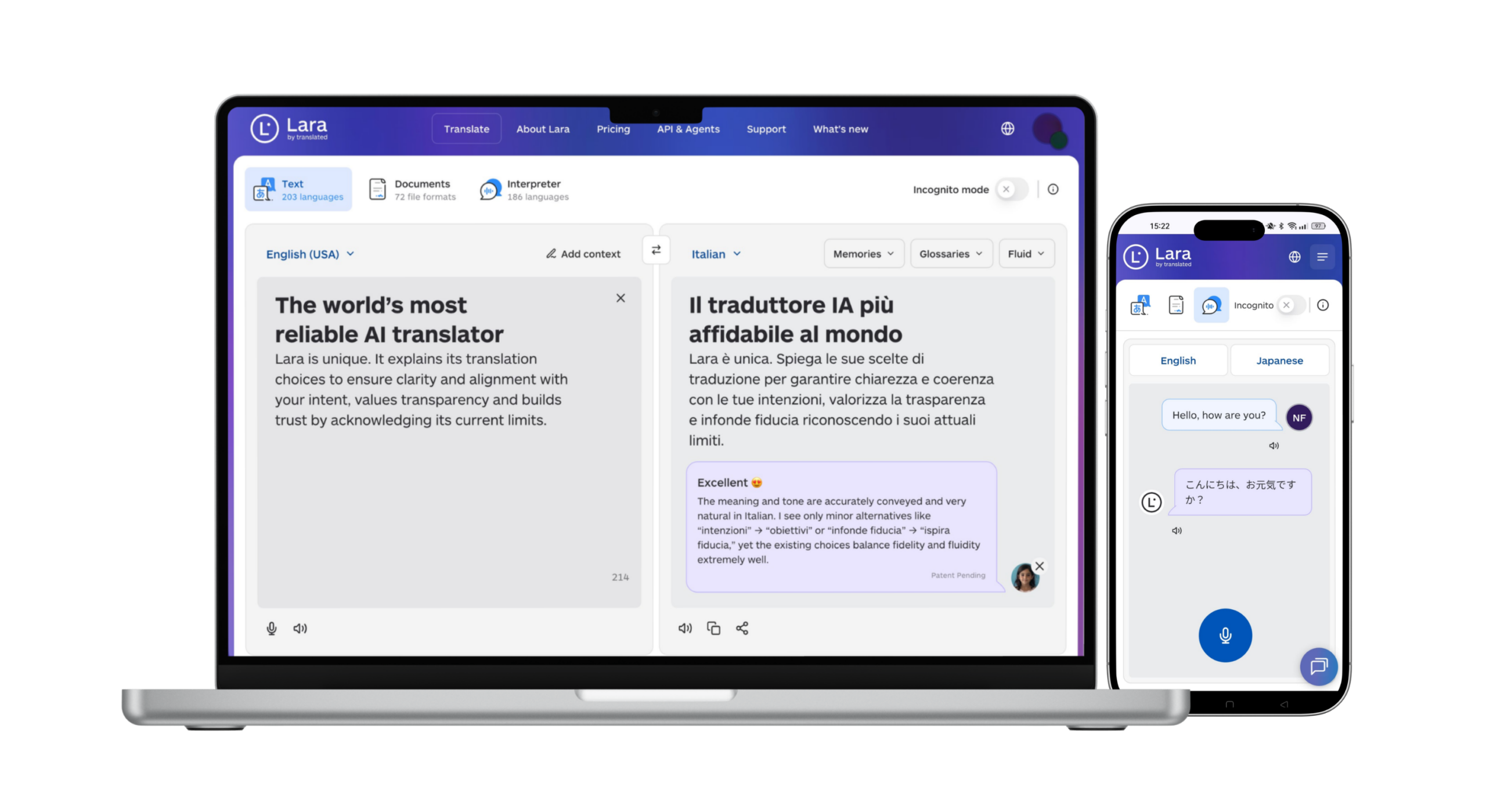
Lara Translate, built by Translated, a company with more than 25 years of professional translation experience, addresses that layer directly. It handles document-level translation across 200+ languages and 70+ file formats, with glossary and terminology controls that keep brand and legal language consistent across markets.
This isn’t a replacement for tax, privacy, or accessibility tooling. It’s the fifth pillar those tools don’t cover. A storefront can be fully compliant on tax, data privacy, and accessibility, and still lose international customers if the content itself doesn’t read naturally in their language.
How to choose the right international ecommerce compliance stack
Step 1: map your actual regulatory exposure by market, not generically. Tax, privacy, and accessibility requirements all vary by country. Build your stack around the specific markets you’re entering.
Step 2: decide between an integrated platform and a best-of-breed stack. Global-e offers one managed journey; assembling Avalara, Pandectes, EnableAll, and a logistics tool separately can be more flexible but requires more integration work.
Step 3: don’t treat basic built-in translation as sufficient for compliance-adjacent content. Privacy policies, terms of service, and accessibility statements often carry legal weight. A generic or machine-translated version without review is a real risk.
Step 4: budget for content localization as its own line item, not an afterthought. Tax, privacy, and accessibility tools all have dedicated budgets; content localization deserves the same treatment rather than being bundled in as a footnote to platform translation.
Step 5: test the full customer journey in the target market’s language, not just checkout mechanics. A tax-compliant, accessible checkout still fails if the customer can’t understand what they’re buying.
Launching your storefront in five new markets?
Upload your product descriptions, policy pages, and storefront copy and get them back localized, with terminology consistent across every market.
The bottom line
There’s no single tool that covers all five compliance layers, and that’s the real finding here, not a gap in this comparison. Avalara and Global-e win on tax and duty. Pandectes wins on data privacy. EnableAll wins on accessibility. Shopify Markets wins on native multi-market convenience. Pick the layer that’s your biggest exposure, filter on it first, and assemble the rest around it.
One line belongs on every international ecommerce checklist regardless of stack: budget for content localization the same way you budget for tax and privacy tooling. A storefront that’s compliant everywhere still loses the sale if the copy doesn’t read like it was written for the customer reading it.
FAQ
What compliance areas matter most for international ecommerce in 2026?
Five areas matter together: tax and customs duty calculation, data privacy law, accessibility standards, payment and currency localization, and content localization. Most guides cover the first four and treat the fifth as an afterthought.
Is Shopify Markets’ built-in translation enough for an international storefront?
It’s a reasonable starting point for basic navigation and simple content, but generally less precise than dedicated, context-aware translation for nuanced product descriptions, brand voice, and legal content. Dedicated localization platforms with glossary and terminology controls are built specifically to close that gap.
Do privacy policies need to be translated for international compliance?
In most jurisdictions, functionally yes, since consent requirements generally assume the user can understand what they’re agreeing to. A privacy policy in English only is a weak compliance position in a non-English-speaking market.
What’s the difference between tax automation tools like Avalara and Quaderno?
Avalara offers broad global tax and duty calculation across physical and digital goods. Quaderno specializes specifically in VAT/GST for digital goods and subscriptions.
How does accessibility compliance differ by country?
Standards are not interchangeable: the ADA governs the US, the EAA governs the EU, Canada has the ACA, Ontario has the AODA, and countries including Japan, Israel, and Brazil have their own standards.
Have a valuable tool, resource, or insight that could enhance one of our articles? Submit your suggestion
We’ll be happy to review it and consider it for inclusion to enrich our content for our readers!
This article is about
- How 9 tools compare across tax and duty automation, data privacy, accessibility, and multi-market storefront management
- Why Avalara, Global-e, Pandectes, EnableAll, and Shopify Markets each lead for a different compliance layer
- Why international ecommerce compliance is really five problems, not four, and why content localization is the layer most stacks miss
- A 5-step framework for building a compliance stack: map exposure by market, choose integrated vs. best-of-breed, don’t trust basic translation for legal content, budget localization separately, and test the full journey in-language
- Why a fully compliant storefront can still lose international customers if the content itself doesn’t read naturally in their language
Useful articles
- Best rank tracking & AI search visibility tools in 2026: 12 platforms compared
- Best employee training software in 2026: 10 platforms compared