

Adding a contact form, countdown timer, popup, or live chat button to a website should not require a custom development project. The harder part is choosing a tool whose pricing, traffic limits, design controls, and integrations still make sense after the first campaign goes live.
This guide compares ten no-code website widget and engagement platforms in 2026. It also covers a detail that matters once a website starts attracting international visitors: translating the text inside forms, popups, FAQs, and other widgets.
|
TL;DR
|
What makes a no-code widget platform worth using in 2026?
Broad marketplaces and category specialists solve different problems. POWR, Elfsight, and Common Ninja provide many widget types in one platform. Tidio concentrates on customer service, while tools such as OptinMonster, Wisepops, Justuno, Sleeknote, and Hello Bar focus on lead capture and on-site campaigns.
Pricing models also differ. Some vendors charge by widget or app, while others use campaign impressions, website pageviews, monthly visitors, or conversation quotas. Compare costs against your expected usage and billing period. A low annual price can look different when viewed as a monthly commitment, and add-ons can materially change the total.
Customization varies by product and plan. Confirm that the editor supports the layout, fonts, behavior, targeting, and brand controls you need. If a standard template cannot produce the experience you want, an AI-assisted or custom builder may be a better fit.
Compatibility deserves a direct check. Most vendors provide an embed script, but native integrations and feature support can vary by site builder, ecommerce platform, and widget type.
The best no-code website widget and engagement tools in 2026
| Platform | Best fit | Category | Current entry point |
|---|---|---|---|
| POWR | Businesses that want a broad app suite | General widget platform | Free plan; Business is $89.99/month, or $80.99/month billed annually, for the full suite |
| Elfsight | Businesses that want a large catalog and simple embeds | General widget platform | Free plan (1 widget, 200 monthly views); single-app paid plans from about $6/month |
| Tidio | Customer service chat with an optional AI agent | Chat and AI customer service | Free plan; Starter is $29/month, or $24.17/month billed annually |
| OptinMonster | Popup and lead-capture campaigns | Conversion optimization | Basic is $21/month on monthly billing |
| Wisepops | Managed, multi-channel traffic activation | On-site engagement platform | From €499/month, based on traffic, channels, and service level |
| Justuno | Ecommerce personalization and product recommendations | Conversion optimization | Lite is $59/month (up to 10,000 monthly visitors); 14-day trial |
| Embeddable | AI-assisted widget creation across many formats | AI widget builder | Free option; paid pricing not published, confirm at checkout |
| Sleeknote | On-site campaigns priced by monthly visitors | Popup and on-site messaging | Core is $69/month, or $55/month billed annually, for up to 25,000 visitors |
| Hello Bar | Bars, popups, alerts, sliders, and page takeovers | Popup specialist | Free plan; Growth is $29/month, or $289/year billed annually |
| Common Ninja | A broad catalog with per-widget scaling | General widget platform | Free plan; a single widget from $24/year ($2/month equivalent) |
Prices are list prices shown on vendor pages checked in September 2026. Taxes, discounts, billing terms, usage limits, promotional offers, and add-ons can change the total.
1. POWR
Best for: Businesses that want a broad collection of widgets under one provider.
POWR offers a suite of 60+ apps, including forms, popups, social feeds, countdown timers, reviews, and other ecommerce tools. Its website says the apps are trusted on more than 12 million websites and by over 500,000 businesses. The Business plan provides access to the full suite for $89.99 per month, or $80.99 per month when billed annually at the standard 10% annual discount. Pricing tiers and usage limits differ from app to app, so check the exact combination you need.
Verdict: A practical option when breadth matters, provided you check the plan and limits for each app before committing.

2. Elfsight
Best for: Businesses that want a large app catalog with a straightforward embed workflow.
Elfsight advertises access to 96+ apps through its All Apps Packs. Its free single-app plan includes one widget and 200 monthly views. Paid single-app plans start at roughly $6 per month, while All Apps Packs, which unlock the full catalog, start at roughly $18 per month. View limits apply per app, and exceeding the monthly allowance can temporarily deactivate a widget, so match the plan to your traffic.
Verdict: A strong catalog for testing and launching standard website widgets, with view limits that need careful attention.
3. Tidio
Best for: Businesses that want live chat, ticketing, and an optional AI customer service agent.
Tidio combines live chat and ticketing with separate automation products, including the Lyro AI Agent and Flows. The free plan includes limited conversation quotas and a one-time allowance of 50 Lyro AI conversations. Starter costs $29 per month, or $24.17 per month when billed annually. Lyro is priced separately and starts at $32.50 per month for 50 AI conversations, so its quota does not overlap with the customer support plan.
Verdict: A focused choice when customer conversations are the main requirement. Model both the support quota and the AI quota when estimating cost.
4. OptinMonster
Best for: Businesses building popup, floating bar, inline form, and lead-capture campaigns.
OptinMonster provides a hosted campaign builder and a WordPress plugin, and it works on nearly any website that can add custom JavaScript, including ecommerce stores. Its Basic monthly plan is $21 and includes one site, 2,500 campaign pageviews, unlimited campaigns, and core popup formats. Higher plans add more sites, impressions, targeting, testing, and integrations.
Verdict: A good fit for structured lead-capture campaigns across WordPress, ecommerce, and other sites. Select the plan by campaign impressions and required features.
5. Wisepops
Best for: Businesses looking for a managed, multi-channel on-site engagement platform.
Wisepops covers six channels: popups, embeds, an on-site feed, bars, quizzes, and web push. The company says pricing depends on traffic, channels, and service level, with plans starting at €499 per month, and its billing documentation confirms that pricing is based on website pageviews rather than popup views or clicks. A 14-day trial is available.
Verdict: Better suited to teams that want a broader traffic-activation platform with strategic support than to buyers looking for an inexpensive popup widget.
Launching widgets for a global audience?
Before your forms, popups, and FAQs go live in new markets, translate the source copy so every visitor reads it in their own language. Lara Translate handles the text across 200+ languages.
6. Justuno
Best for: Ecommerce teams that need targeting, segmentation, upsells, and cross-sells.
Justuno supports on-site promotions and product recommendations. Its documentation lists recommendation algorithms for upselling, cross-selling, most viewed, most purchased, previously viewed, and other ecommerce use cases. Product recommendations are currently available for Shopify, BigCommerce, WooCommerce, and Magento installations. Its Lite plan starts at $59 per month for up to 10,000 monthly visitors, with a Done-For-You plan at $299 per month and a 14-day trial.
Verdict: Worth considering for ecommerce personalization, especially when product recommendations are central. Confirm platform compatibility and current visitor limits directly.
7. Embeddable
Best for: Users who want to create interactive widgets with templates and natural-language assistance.
Embeddable describes itself as a no-code AI widget builder that supercharges an existing website with interactive widgets and landing pages. It offers a library of 100+ templates across formats such as calculators, forms, quizzes, popups, audio players, and timers, plus a chat-based builder that turns a plain-English description into a working widget. The vendor publishes a free option, but exact paid prices and limits should be confirmed at checkout.
Verdict: A useful option when standard templates are too restrictive and an AI-assisted starting point can speed up creation.
8. Sleeknote
Best for: Businesses that want unlimited campaigns and domains under visitor-based pricing.
Sleeknote provides lead-capture and on-site campaign tools, including forms, product-sales campaigns, visitor guidance, and contact campaigns. The Core plan for up to 25,000 monthly visitors costs $69 per month, or $55 per month when billed annually, and it includes unlimited campaigns and domains. Gamification features such as Spin to Win are sold as a separate plan tier, and there is a 14-day free trial rather than a permanent free plan.
Verdict: A clear visitor-based option for teams that value unlimited campaigns and domains. Compare the annual commitment and any gamification add-on against your expected traffic.

9. Hello Bar
Best for: Businesses that need bars and popups without a wider widget marketplace.
Hello Bar supports persistent header and footer bars, modals, alerts, sliders, and full-page takeovers. Its site says more than 600,000 websites have used the product. The free Starter plan includes up to 5,000 popup views. Growth costs $29 per month, or $289 per year when billed annually, and includes 50,000 monthly views, with higher plans available for larger volumes.
Verdict: A focused option for announcement and lead-capture formats, with plans tied to view allowances.
10. Common Ninja
Best for: Businesses comparing broad widget catalogs and flexible widget counts.
Common Ninja says its platform includes 200+ no-code widgets, from reviews and social feeds to forms, chatbots, and booking tools, used by more than 500,000 businesses. Pricing scales with the number of widget instances. For one widget, annual list prices start at $24 for Essentials, $38.40 for Pro, and $62.40 for Ultimate, equivalent to $2, $3.20, and $5.20 per month. A free plan is also available.
Verdict: A broad alternative with low entry pricing for a single widget. Calculate the cost using the number of widget instances and the features you need.
How to choose the right no-code widget platform
1. Decide whether you need breadth or specialization. A broad catalog can consolidate several tools, while a specialist may provide deeper targeting, chat, or ecommerce features.
2. Model the real cost. Include annual billing requirements, widget counts, views, visitors, campaign impressions, conversations, AI quotas, and add-ons.
3. Check customization before buying. Build a trial version of your hardest layout or campaign, not only the simplest one.
4. Confirm compatibility. Check the exact widget, site builder, ecommerce platform, analytics setup, consent requirements, and integrations you plan to use.
5. Plan the translation workflow. Keep an editable source for form labels, popup copy, error messages, and FAQ content so updates can be translated consistently.
A note on translating widget content
A widget can load for a visitor anywhere in the world, but loading is separate from translation. The labels, messages, and content inside a form, popup, or FAQ stay in whatever language you wrote them unless you translate them and add the translated versions through the vendor’s multilingual controls.
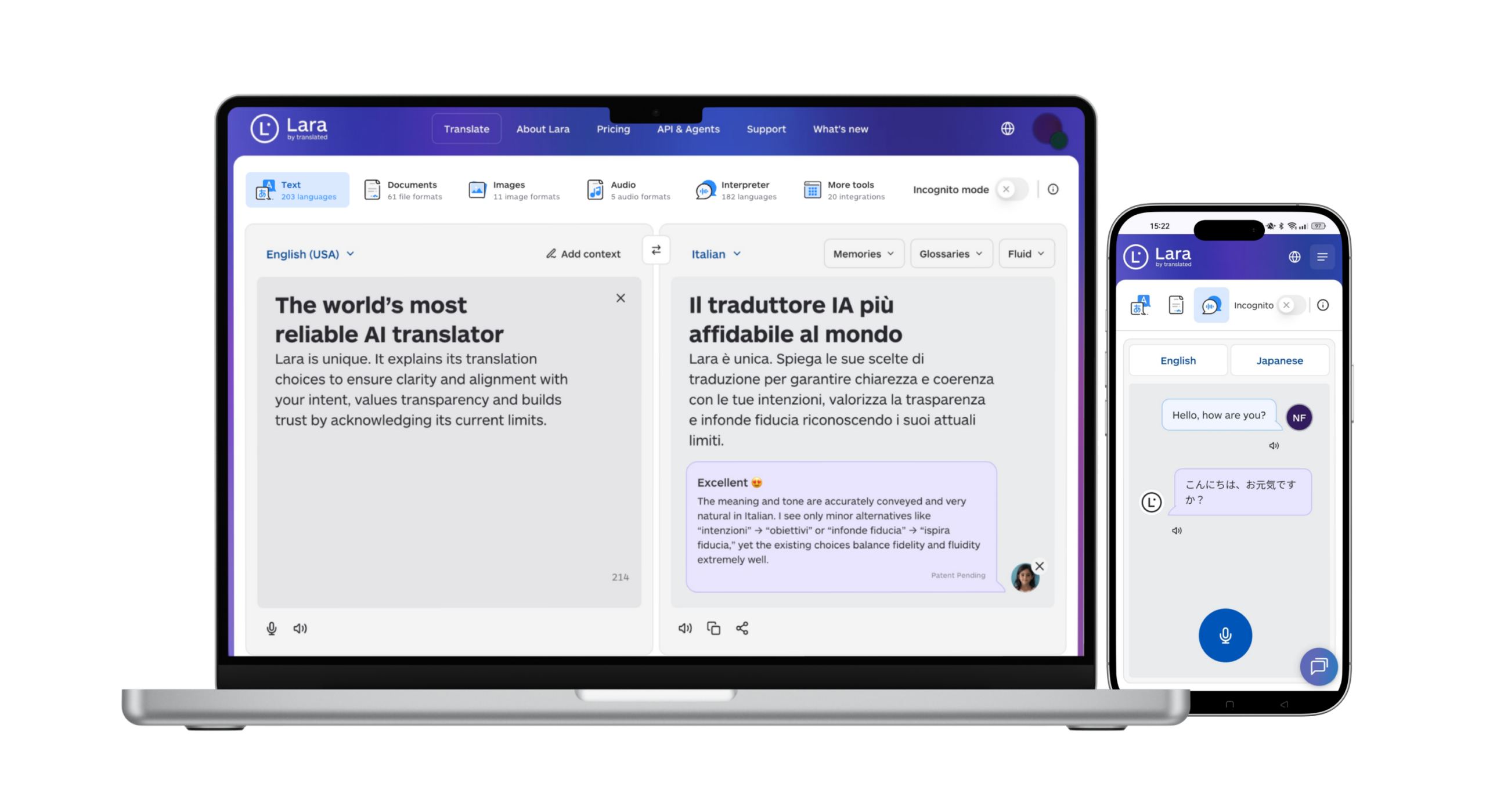
Lara Translate can translate the source text used in forms, popups, FAQs, and other website widgets. Lara Translate supports 200+ languages and 60+ file formats. It is a document and text translation platform rather than a website-widget localization layer, so translated copy still needs to be added to the widget or website through the vendor’s multilingual controls, separate widget versions, or the site’s localization workflow.
Keep every language version consistent
When you update a form label or a popup headline, the translations need to keep up. Lara Translate turns your source copy into 200+ languages and handles 60+ file formats, so your widget text stays accurate as it changes.
The right no-code widget platform depends on the job in front of you: a broad marketplace when you need several standard widgets from one provider, a specialist when chat, conversion targeting, or ecommerce personalization is the point. Whichever you pick, model the cost against your real traffic, test your hardest use case in a trial, and plan how the text inside those widgets will reach visitors in other languages.
Have a valuable tool, resource, or insight that could enhance one of our articles?
Send us an email at press@laratranslate.com
We’ll be happy to review it and consider it for inclusion to enrich our content for our readers! ✍️
Frequently asked questions
What is the best no-code website widget tool in 2026?
There is no single best option for every site. POWR, Elfsight, and Common Ninja are broad catalogs. Tidio focuses on customer service chat and AI. OptinMonster, Wisepops, Justuno, Sleeknote, and Hello Bar focus on on-site campaigns. Embeddable is designed for AI-assisted widget creation. The best choice depends on which of these jobs is central to your site.
Should I use a widget marketplace or a category specialist?
Choose a marketplace when you need several standard widget types and prefer one provider. Choose a specialist when chat, conversion targeting, ecommerce personalization, or another single function is central to the project.
Why is no-code widget pricing so hard to compare?
Vendors charge against different units, including app subscriptions, widget instances, monthly views, website pageviews, campaign impressions, visitors, and customer conversations. Billing frequency and add-ons also affect the effective monthly cost, so two plans with a similar headline price can cost very different amounts at your traffic level.
Do website widgets automatically work for international visitors?
A widget can load internationally, but that does not mean its labels, messages, and content are translated. Check whether the vendor supports multiple languages and how translated versions are selected for each visitor, and translate the source copy separately if the vendor does not handle it for you.
Are free plans for website widgets usable?
Free plans can be useful for testing and low-volume sites, but limits vary. Elfsight’s free plan allows one widget with 200 monthly views, while Hello Bar’s free Starter plan includes up to 5,000 views. Check branding, traffic, feature, and widget-count limits before launch.
This article is about
- Broad widget marketplaces (POWR, Elfsight, Common Ninja) and category specialists (Tidio, OptinMonster, Wisepops, Justuno, Sleeknote, Hello Bar, Embeddable) serve different needs.
- No-code widget vendors price against very different units: apps, widget instances, views, pageviews, visitors, campaign impressions, and conversations.
- Current entry points range from free plans and a single widget at $2 per month to managed platforms starting at €499 per month.
- A widget loading for an international visitor is separate from its text being translated, which the vendor may or may not handle.
- Lara Translate can translate widget source copy across 200+ languages and 60+ file formats, but the translated text still has to be added through the widget or site localization workflow.
Sources
- POWR app suite and website scale (60+ apps, 12 million websites)
- POWR plan pricing, including the Business plan
- Elfsight pricing, free plan limits, and 96+ app catalog
- Tidio pricing and Lyro AI quota
- OptinMonster monthly pricing
- Wisepops pricing and channels
- Wisepops pageview-based billing documentation
- Justuno pricing and plans
- Justuno recommendation algorithms and platform compatibility
- Embeddable templates and AI chat builder
- Sleeknote pricing and Core plan limits
- Hello Bar plan pricing and view allowances
- Common Ninja pricing
- Common Ninja widget catalog (200+ widgets)
- Lara Translate supported languages
- Lara Translate supported file formats
- Translated company background and experience
This article was produced by the Lara Translate content team. Lara Translate is an AI translation platform built by Translated, with more than 25 years of professional translation experience. Businesses adding forms, popups, FAQs, and other website widgets for global audiences use Lara Translate to translate the copy inside them, across 200+ languages and 60+ file formats.