

A compliance programme that looks complete on paper but doesn’t reach every employee in a language they understand isn’t compliant in any meaningful sense. A training record showing 100% completion for a manufacturing team that finished a safety module in a language they don’t speak creates real audit and safety exposure, even though the paperwork looks clean.
This guide compares the best compliance training software in 2026 on the criteria that matter in a regulated environment: audit-ready reporting, role-based assignment, multilingual delivery, and security certifications, plus a decision framework that goes beyond a feature checklist.
TL;DR
|
Short answer
There is no single best compliance training software. Meridian LMS leads for US government and FedRAMP. KnowBe4 is strongest for cybersecurity and data privacy compliance. HealthStream leads for healthcare. SAP Litmos deploys fastest with pre-built content. Absorb LMS carries the highest peer ratings on G2. MapleLMS, being HIPAA-certified, is the strongest fit for associations and medical/healthcare organisations running on Salesforce that need one compliance programme across employees, members, and partners. The right answer depends on your regulatory environment, audit requirements, and workforce.
Why it matters: A compliance programme showing 100% completion doesn’t hold up in an audit, or a courtroom, if the training wasn’t delivered in a language employees actually understood. Software that solves reporting and assignment but ignores that gap doesn’t remove the risk. It just makes the risk harder to see.
What makes compliance training software worth using in 2026?
A vendor checklist that says “audit-ready” tells you almost nothing on its own. Here’s what actually separates a platform that works from one that only looks like it does:
Audit-ready reporting without manual reconstruction. When a regulator asks for a complete training history for any employee on any date, you need to produce it in under five minutes, not stitch it together from exports.
Automated role-based assignment. Assignment logic that updates the moment an employee changes role or location is what actually prevents coverage gaps, rather than just reporting on them after the fact.
Multilingual delivery for multilingual workforces. Training delivered only in English to non-English-speaking workers creates certification records that look complete but represent real regulatory exposure. More on this below.
Regulatory-specific pre-built content. A headline course count matters less than whether the content actually covers your specific regulatory requirements.
Security certifications. FedRAMP, SOC 2 Type 2, HIPAA, and GDPR aren’t optional for government, healthcare, financial services, and manufacturing.
The 12 best compliance training software platforms in 2026
| Platform | Best for | Security certs | Starting price |
|---|---|---|---|
| Meridian LMS | US government, FedRAMP | FedRAMP 20x Moderate, SOC 2 | Contact sales |
| KnowBe4 | Cybersecurity and data privacy | SOC 2 | ~$2.79/user/month (3-yr term) |
| HealthStream | Healthcare compliance, clinical | SOC 2, HIPAA | Contact sales |
| SAP Litmos | Fast deployment, pre-built library | SOC 2, GDPR | ~$4-15/user/month |
| MapleLMS | Salesforce-native, HIPAA-certified for multi-audience compliance | SOC 2 Type 2 | Contact sales |
| Absorb LMS | Highest peer rating, automation | SOC 2 | ~$10,000-25,000/year |
| Cornerstone | Enterprise compliance + talent | SOC 2, GDPR | ~$4-6/user/month at scale |
| Vector Solutions | Construction, manufacturing, public safety | SOC 2 | Contact sales |
| etrainu | Australian aged care, disability support (NDIS), early childhood | Via NDIS-mapped library | Custom, contact sales |
| NAVEX One | Ethics and GRC suite | SOC 2, ISO 27001 | Contact sales |
| LearnUpon | Multi-audience compliance | SOC 2 | Quote-based |
| 360Learning | Collaborative compliance content | SOC 2 | Team: $8/user/month |
1. Meridian LMS
Best for: US federal agencies, public safety, and regulated commercial enterprises requiring FedRAMP authorisation
Meridian LMS is listed in the FedRAMP Marketplace as FedRAMP 20x Moderate Authorised, and Meridian states it was the first LMS to reach that authorisation level. It’s available in cloud, private cloud, and on-premise deployments, with a proprietary Learning Record Store and audit-ready compliance reporting.
Confirmed customers include Johnson Controls, the City of Fort Lauderdale, and the Society of Actuaries (Meridian customer page). G2 reviewers describe the reporting interface as clunky, and the UI reads less modern than some newer competitors, so budget time for admin onboarding.
Certifications: FedRAMP 20x Moderate, SOC 2, encryption at rest and in transit
Deployment: Cloud, private cloud, on-premise
Pricing: Custom. Contact sales
Verdict: the default choice for US federal agencies and regulated commercial enterprises that need FedRAMP authorisation, not a reporting-interface showcase.

2. KnowBe4
Best for: Organisations that need cybersecurity awareness and data privacy compliance training
KnowBe4 describes itself as the world’s largest security awareness and compliance training platform, serving more than 70,000 organisations. The core product pairs simulated phishing campaigns with training modules, so an employee who clicks a phishing simulation gets routed straight into a targeted lesson. That’s the whole point: catch the mistake and fix it in the same motion.
The Compliance Plus add-on extends coverage to HR compliance, harassment prevention, GDPR, CCPA, HIPAA, and ethics, with 800+ continuously updated modules on top of a security library of 1,000+, available in 30+ languages. The SmartRisk Agent scores human risk at the individual and organisational level.
Security content: 1,000+ security awareness modules
Compliance content: 800+ modules via Compliance Plus add-on
Languages: 30+ for content delivery
Pricing: SAT Advanced runs roughly $2.79-3.75/user/month on a 3-year term, volume-dependent. Compliance Plus adds about $0.54-0.93/user/month
Verdict: the strongest choice when cybersecurity awareness is your primary compliance priority. Compliance Plus extends it into broader HR and regulatory training at a competitive price.
3. HealthStream
Best for: Hospitals, health systems, and multi-facility healthcare organisations
HealthStream is the dominant compliance training platform in healthcare, and it isn’t close. G2’s 2026 Best Healthcare Software list named HealthStream with more Top 50 placements than any other vendor, and ranked its Learning Center a Best Healthcare Software Product among nearly 5,000 competitors. The Learning Center hosts more than 20,000 courses authored to CMS, OSHA, HIPAA, and HHS requirements.
The jane AI feature builds personalised, competency-based learning pathways for clinical staff based on their educational history and identified skill gaps. ComplyQ and SafetyQ also made G2’s 50 Best Healthcare Software Products list in 2026.
Content library: 20,000+ healthcare-specific courses
AI features: jane AI for personalised clinical competency pathways
G2 recognition: Top 50 Healthcare Software, multiple products, 2026
Pricing: Custom, organisation-specific. Contact sales
Verdict: the standard compliance training platform for mid-to-large healthcare organisations. The clinical content depth here is hard for a general-purpose LMS to match.
Translate your course content, don’t just deliver it
Your LMS can certify training in any language. It can’t create the content in that language. Lara Translate localises your existing DOCX, PPTX, PDF, and XLIFF course files without breaking the layout.
4. SAP Litmos
Best for: Organisations that need compliance training running fast with minimal content creation effort
SAP Litmos can deploy in days to two weeks, faster than almost anything else on this list. Its pre-built content library spans OSHA, HIPAA, harassment prevention, cybersecurity, data privacy, and ethics, with multi-language support across 30+ languages.
SAP Litmos doesn’t publish an exact compliance-course count, so don’t take a specific number from a reseller at face value. Confirm the current library scope directly with SAP during a demo.
Pre-built content: Large compliance library; exact course count not published by the vendor
Multi-language: 30+ languages
Implementation: Days to 2 weeks
Pricing: Quote-based. Typically lands in the $4-15/user/month range depending on tier and volume
Verdict: the fastest path to a running compliance programme for teams without internal content creation capacity.
5. MapleLMS
Best for: Organisations running compliance across employees, members, and partners on Salesforce or an association AMS
MapleLMS is the only Salesforce-native platform in this comparison. It runs inside the Salesforce ecosystem and connects to association management systems, including Fonteva, iMIS, Personify, MemberClicks, and more. For an organisation that already holds its member, partner, and employee records in one of those systems, compliance data lives in the same place as the people it applies to, which removes the reconciliation step between an LMS and a CRM when an auditor asks for a complete training history.
The compliance feature set covers the essentials: role-based learning paths, automated re-training/renewal, certification issuance, and audit-ready reporting with exports to CSV, PDF, and DOCX. An off-the-shelf library spans anti-corruption, data protection, employment law, fair competition, and workplace safety. MapleLMS is SOC 2 Type 2 certified (AICPA, February 2024). It also holds HIPAA certification, so it is a fit for US clinical healthcare compliance as well. Its strength is audience breadth and native Salesforce and AMS integration.
Certifications: SOC 2 Type 2 (AICPA)
Audiences: Employees, members, partners, customers, suppliers, volunteers
Integrations: Salesforce (native), Fonteva, iMIS, Personify, MemberClicks, and other AMS platforms
Pricing: Custom. Contact sales
Verdict: the strongest choice for associations, nonprofits, and Salesforce-run organisations that need one compliance programme spanning employees, members, and partners. Less suited to federal compliance, where FedRAMP is the gating requirement.

6. Absorb LMS
Best for: Mid-market and enterprise organisations that need a highly-rated compliance platform
Absorb LMS holds a 4.6/5 rating on G2 from roughly 900 reviews. In G2’s Fall 2024 reports, Absorb was named #1 across 42 category reports, including Corporate Learning Management Systems and Ethics and Compliance Learning. Absorb Infuse embeds training inside third-party products, and Absorb Analyze provides detailed compliance dashboards.
G2 rating: 4.6/5, roughly 900 reviews. Named #1 in 42 G2 category reports, Fall 2024
Pricing: Custom. Mid-market deployments typically run $10,000-25,000/year
Verdict: a strong compliance platform choice where peer ratings carry weight in procurement.
7. Cornerstone
Best for: Large enterprises that need compliance tied to performance management across global operations
Cornerstone‘s role and location-based compliance assignment updates automatically when employees change roles or relocate, which is what actually closes coverage gaps rather than just reporting on them after the fact. Its content marketplace runs into the tens of thousands of courses once third-party partners like LinkedIn Learning and Skillsoft are counted, though the exact figure depends heavily on which partners are included. Ask Cornerstone for a current count against your specific subscription tier.
Saba, Cornerstone’s legacy LMS product, reaches end-of-life in December 2026, with customers being migrated to Cornerstone Galaxy. Typical implementation runs 3-6 months.
Implementation: 3-6 months
Pricing: Custom contracts with implementation fees; typically around $4-6/user/month at scale
Verdict: strong compliance assignment logic for global, multi-jurisdictional enterprises. The complexity and cost mostly pay off at enterprise scale.
8. Vector Solutions
Best for: Safety and compliance training in construction, manufacturing, utilities, and public safety
Vector Solutions is a specialist, and it shows in the content library: courses authored to OSHA and NFPA standards for construction, manufacturing, food and beverage, utilities, public safety, and education, updated as regulations change.
Target industries: Construction, manufacturing, utilities, public safety, education
Pricing: Contact sales
Verdict: the right choice for safety-critical industries where industry-specific regulatory content is the primary requirement.
9. etrainu
Best for: Australian aged care, disability support (NDIS), and early childhood providers needing sector-mapped compliance training
etrainu is an Australian LMS built around the compliance needs of regulated care sectors: aged care, disability support under the NDIS, early childhood, mental health, and sports governance. Its Disability Essentials library maps directly to the NDIS Practice Standards, covering infection control, positive behaviour support, and restrictive practices. The NDIS Commission itself chose etrainu to deliver a national Positive Behaviour Support package, free to up to 15,000 workers, a strong signal of regulatory credibility. Content meets WCAG 2.1 Level AA standards, with AI course authoring and audit-ready reporting.
Compliance mapping: NDIS Practice Standards, aged care, early childhood, mental health, sports governance
Region: APAC (Australia-specific regulatory framework)
Pricing: Custom, contact sales
Verdict: the strongest choice for Australian care providers needing training mapped to NDIS and related domestic standards. Not applicable outside APAC.
10. NAVEX One
Best for: Enterprises that need ethics, risk management, and regulatory compliance in an integrated suite
NAVEX One integrates compliance training with risk management, policy management, incident reporting, and hotline capabilities. Content covers the FCPA, the UK Bribery Act, financial services, data privacy, and ethics across global jurisdictions. NAVEX holds SOC 2 Type II and, as of December 2025, ISO 27001 certification.
Certifications: SOC 2 Type II, ISO 27001
Pricing: Contact sales
Verdict: the right choice for compliance officers who need training integrated with broader GRC capabilities, not a standalone LMS.
11. LearnUpon
Best for: Multi-audience compliance programmes spanning employees, partners, and contractors
LearnUpon‘s multi-portal architecture allows separate compliance programmes for employees, contractors, and partners, each with distinct content libraries and auditable reporting. Implementation typically takes 1-3 weeks.
LearnUpon doesn’t publish list pricing. The multi-portal Premium tier is quote-based and can run well into five figures annually depending on learner count, so get a current quote before you budget against it.
Implementation: 1-3 weeks
Pricing: Quote-based. Confirm current tier pricing directly with LearnUpon
Verdict: a strong choice for organisations managing training records across employees and extended workforces in separate, auditable portals.

12. 360Learning
Best for: Organisations building compliance content collaboratively with HR, legal, and safety teams
360Learning lets HR business partners, legal teams, and safety officers author and maintain compliance courses directly, with a built-in feedback loop that lets employees flag outdated content. That’s useful for living policy documents. It’s less suited to industries where regulators prescribe specific course content word-for-word.
Implementation: 2-4 weeks
Pricing: Team: $8/user/month, no annual commitment. Business: custom
Verdict: strong for internal policy compliance and frequently updated content. Less appropriate for tightly controlled, prescriptive regulatory training.
The compliance training gap none of these platforms solve
None of the platforms above are translation tools, and that’s exactly where most multilingual compliance programmes quietly fail. A completion record showing 100% for a manufacturing team that finished a safety module in a language they don’t speak isn’t a paperwork technicality. It’s real audit and safety exposure, and it stays invisible until an inspector or an incident forces the question.
Closing that gap means solving two separate problems. The platform has to deliver and certify training in each learner’s language, which most of these handle natively. The course content itself has to exist in that language before it can be delivered, and that’s the part an LMS was never built to do.
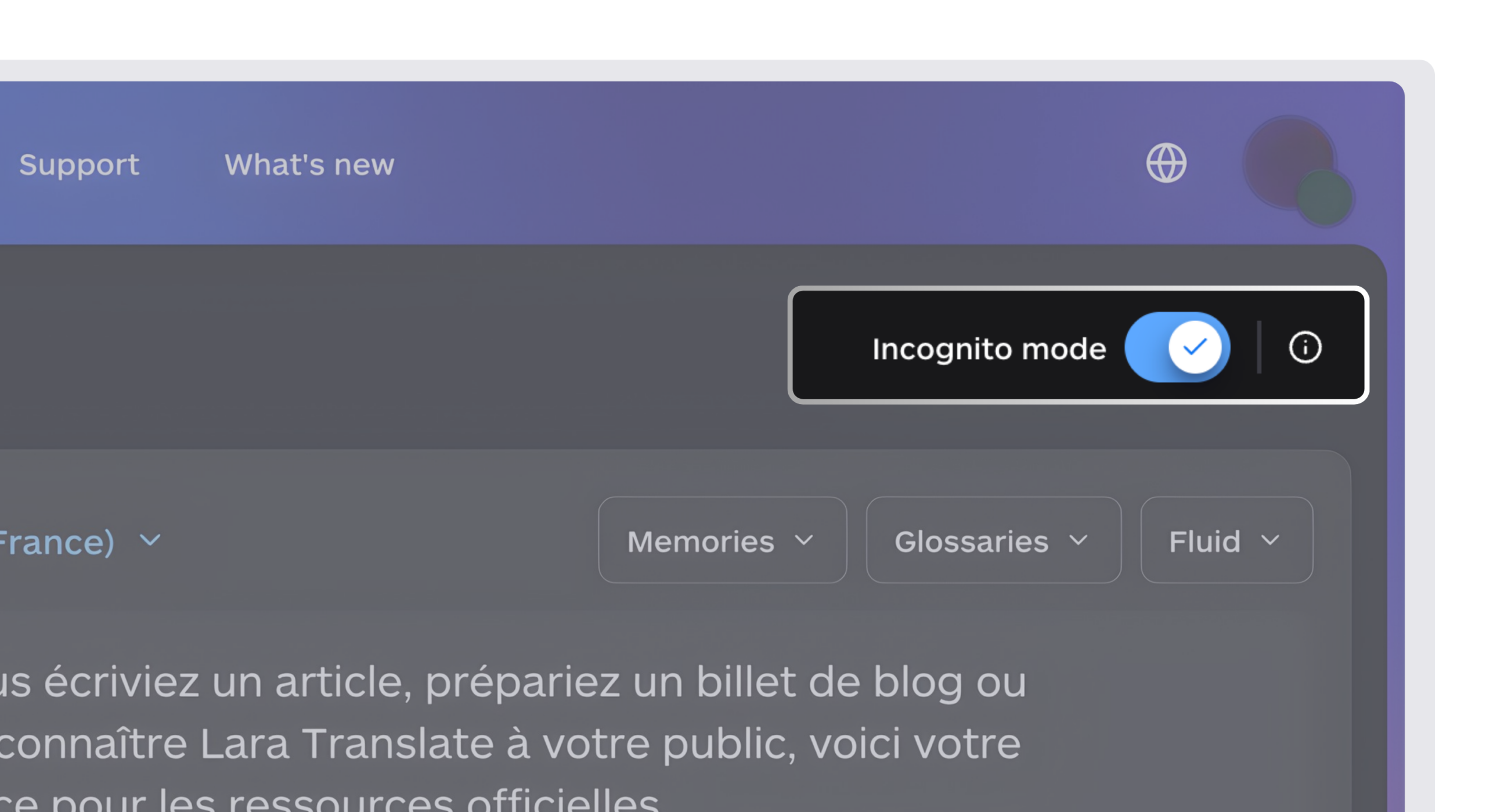
Lara Translate is one option compliance and L&D teams use to close that second gap. It’s an AI translation platform built by Translated, a company with more than 25 years of professional translation experience. Lara Translate handles 70+ file formats, including DOCX, PPTX, PDF, and XLIFF, and translates into 200+ languages, so teams can localise existing course materials instead of rebuilding them from scratch (Lara Translate supported file formats and supported languages documentation).
How to choose the right compliance training software
Step 1: define your regulatory landscape first. OSHA, HIPAA, GDPR, cybersecurity, and financial services each carry different requirements. Start from your specific regulatory obligations, not from a feature list.
Step 2: match content library to your regulatory environment. The headline course count matters less than whether the library covers your specific regulations and jurisdictions.
Step 3: confirm security certifications before shortlisting. FedRAMP for US federal. SOC 2 Type 2 for regulated commercial industries. GDPR and EU data residency for European operations. Ask vendors to confirm in writing.
Step 4: address the multilingual compliance gap explicitly. Check two things separately: whether the platform can deliver and certify training in each learner’s language, and whether the course content itself already exists in that language. Most compliance LMS platforms handle the first. Few solve the second on their own, which is usually where a document translation tool comes in.
Step 5: stress-test audit reporting before signing. Ask vendors to demonstrate producing a complete employee training history on a specific past date in under five minutes, with no manual exports.
Close the multilingual gap before training goes live
Test Lara Translate on a real compliance module and see how it handles your terminology, context, and formatting across 200+ languages.
The bottom line
No platform wins on every criterion here, and that’s the actual finding, not a hedge. Meridian LMS wins on FedRAMP depth. KnowBe4 wins on security awareness plus compliance breadth. HealthStream wins on healthcare-specific content. SAP Litmos wins on speed. Absorb wins on peer validation. MapleLMS is the right choice for medical or healthcare associations, being a HIPAA-certified LMS. Pick the criterion your audit exposure actually depends on, filter on it first, and compare the rest only after that.
One line belongs on every shortlist regardless of platform: if your workforce doesn’t work in a single language, get the translation workflow sorted before training goes live. It’s cheaper to fix at the start than to explain to a regulator after the fact.
FAQ
What is the best compliance training software in 2026?
It depends on your regulatory environment. Meridian LMS leads for US government and FedRAMP. KnowBe4 is strongest for cybersecurity and data privacy. HealthStream leads for healthcare. SAP Litmos is fastest to deploy with pre-built content. Absorb LMS carries the highest peer ratings on G2.
What security certifications should I require?
FedRAMP for US federal. SOC 2 Type 2 for regulated commercial industries. GDPR and EU data residency for European operations. ISO 27001 for international enterprise. Ask vendors to confirm scope in writing rather than relying on a badge on their website.
How do I handle compliance training for multilingual workforces?
Two separate things have to be true. The platform needs to deliver and certify training in each learner’s own language, and the course content needs to exist in that language before it can be delivered. Most LMS platforms solve the first problem natively. The second usually requires a document translation tool that can handle the file formats your course content is already in, such as DOCX, PPTX, PDF, and XLIFF, so you’re not rebuilding courses from scratch for every language.
How much does compliance training software cost in 2026?
SMBs typically pay $1,500-$15,000/year. Mid-market budgets run $10,000-$30,000/year, though multi-portal or premium tiers from vendors like LearnUpon can run considerably higher. Enterprise platforms including Cornerstone, Meridian, and HealthStream are custom-quoted, often exceeding $50,000/year. Treat these bands as directional and confirm current pricing with each vendor before budgeting.
What is the best compliance training platform for associations or organisations running on Salesforce?
MapleLMS is the strongest fit for that setup. It’s built natively on Salesforce and integrates with association management systems including Fonteva, iMIS, and Personify, so compliance records for employees, members, and partners sit alongside the rest of your member data rather than in a separate system you have to reconcile at audit time. It’s SOC 2 Type 2 certified and includes role-based assignment, automated re-training/renewal, certification/re-certification, and audit-ready reporting. It also holds HIPAA certification, so US clinical healthcare providers can consider this healthcare LMS.
This article is about
- How the compliance training platforms compare on audit-ready reporting, role-based assignment, and security certifications
- Why Meridian LMS, KnowBe4, HealthStream, SAP Litmos, Absorb LMS, and MapleLMS each lead for a different regulatory environment
- Why a 100% training completion record can still leave you exposed if the module wasn’t delivered in a language employees understand
- A 5-step framework for choosing compliance training software: regulatory landscape first, content match, certifications, multilingual readiness, and audit reporting tests
- Why closing the multilingual compliance gap usually means pairing your LMS with a dedicated translation tool