

Selecting the right AI translation for e-commerce websites can make or break your international expansion. The digital marketplace has transformed how consumers shop across borders, creating real growth opportunities for brands that get multilingual commerce right.
Modern e-commerce translation tools should handle complex product catalogs, dynamic pricing, and checkout UX while keeping terminology and brand voice consistent across languages. To choose the best solution, you need to evaluate quality, integrations, performance, cost, and long-term scalability.
TL;DR
|
This guide walks through seven essential steps for selecting AI translation for e-commerce websites that improve customer experience and support measurable international growth.
Step 1: What must e-commerce translation handle beyond text?
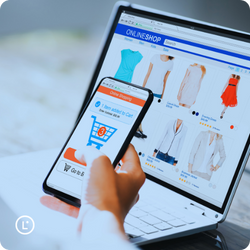 E-commerce localization is about preserving the shopping experience, not just translating words. Your store includes multiple content types that must work together across languages and cultures.
Product catalogs create specific challenges. Technical specifications, marketing descriptions, and variant attributes must stay accurate while adapting to local expectations. A tool that performs well on generic text can still struggle with precise terminology for electronics, fashion, or automotive products.
Customer-facing elements like navigation menus, filters, and category pages need consistent translation that supports intuitive browsing. Product page translation typically includes titles, descriptions, specifications, reviews, and related product blocks. Each element should feel natural in the target language and remain consistent across your catalog.
Shopping cart translation covers high-impact conversion elements: pricing display, shipping options, payment methods, error messages, and checkout progress indicators. Mistakes here directly affect trust and purchase completion.
Most modern stores also require workflows that connect translations to your CMS, PIM, inventory system, and customer support tools. Your solution should support frequent updates across thousands of product pages while keeping terminology and tone consistent.
If you want a broader business overview, read why having a multilingual store is beneficial for your ecommerce.
Step 2: How do you evaluate translation quality for product pages and checkout?
 Quality is the foundation of selecting effective e-commerce translation tools. Translation accuracy influences customer confidence, SEO performance, and conversion rates in every market you enter.
Quality varies by language pair. Major languages often perform well across providers, but quality can drop for less common combinations. If you plan to expand into emerging markets, test the exact language pairs you need and prioritize solutions that remain consistent across them.
Domain accuracy matters for specialized catalogs. Fashion stores need reliable sizing and material translation. Tech brands need precise specifications and compatibility details. Product page translation must preserve both factual accuracy and persuasive marketing language.
How to test fast (recommended): ask shortlisted providers to translate 10 real SKUs from your catalog: 3 bestsellers, 3 technical products, 2 seasonal promos, and 2 bundles. Include at least one full checkout flow (cart, shipping, payment, confirmation). Have native reviewers check clarity, tone, and cultural fit.
Consistency across related content is also critical. Bundles, cross-sell recommendations, and seasonal promos should remain coherent. Tools that support translation memories and glossaries can reduce drift across product variants and repeated attributes.
Step 3: How should AI translation integrate with Shopify, WooCommerce, Magento, or your PIM?
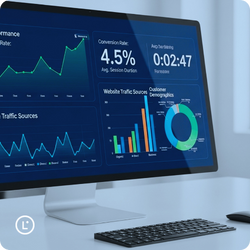 Integration determines whether translation becomes a scalable workflow or a recurring bottleneck. The best e-commerce translation tools fit into your existing stack without adding heavy maintenance.
API coverage: robust APIs enable automatic translation for product catalogs, reviews, and user-generated content. If you update products frequently, you need endpoints that support incremental updates and predictable response times during traffic spikes.
Content operations: marketing teams should be able to review translations, manage approvals, and publish updates without engineering support for every change. Look for clear role-based workflows and collaboration support across marketing, translators, and regional stakeholders.
Platform compatibility: confirm support for your storefront and data layer. Native integrations can reduce setup time, but API-first solutions work well for custom stacks and PIM-driven catalogs.
Versioning and rollback: for high-volume stores, you want a way to handle translation updates safely, including approval gates for checkout-related strings and critical legal content.
Step 4: How fast should AI translation be for e-commerce?
 Speed affects how quickly you can launch new markets and keep catalogs updated. Translation also impacts user experience when localized content is generated or refreshed frequently.
Some providers excel at batch processing (translating large catalogs overnight). Others prioritize near real-time responses for frequent product updates. Match your choice to your operational reality: if your team updates pricing, inventory, and campaigns daily, you need fast incremental translation.
Checkout reliability: checkout and cart content should not cause delays. Even if you do not translate in real time, the system should support fast updates and avoid slowdowns during peak traffic periods.
Caching: strong caching reduces redundant translation requests and improves performance. Ask how caching works, how content invalidation is handled, and whether you can control it for frequent updates.
Step 5: How do you maintain terminology consistency and brand voice at scale?
 International growth is easier when your product terminology and brand voice stay consistent across languages. This is where features like glossaries, translation memories, and style controls become operational necessities, not “nice to have.”
- Glossaries: enforce product names, materials, sizing terms, and key brand phrases.
- Translation memories (TMs): reuse approved translations across variants, collections, and recurring attributes.
- Style controls: choose output that is more faithful (precise), more fluid (readable), or more creative (marketing), depending on the content type.
- Privacy modes: for sensitive content, you may need an incognito-style workflow where data is not retained.
Lara Translate: professional translation at scale
 If you want a business-focused solution that supports terminology control and workflow scalability, Lara Translate is designed for professional use cases, including marketing and product content.
Lara Translate supports translation at scale with:
- 200+ languages for text and documents: Translate in 200+ languages
- Translation styles to match content needs (Faithful, Fluid, Creative): Translation Styles
- Learning Mode and Incognito Mode for different privacy and data needs: Learning vs Incognito
- Broad file support for document workflows: Supported document formats
- APIs that can support automated localization workflows: Translation API
- MCP support to connect Lara Translate to compatible tools and workflows: Lara Translate MCP Server
Performance can also matter when you translate at high volume. According to Translated, Lara reaches a P99 latency of 1.2 seconds (99% of translations completed in 1.2 seconds): Lara benefits for enterprise localization.
Try Lara Translate for your e-commerce expansion
Test Lara Translate on your product catalogs and see how it handles e-commerce terminology, brand voice, and checkout flows.
Step 6: What does AI translation cost for e-commerce, and what ROI can you expect?
 Budget planning should include both immediate implementation costs and long-term operational expenses. Pricing models vary widely and can change your total cost of ownership depending on catalog size and update frequency.
Common pricing models:
- Usage-based (per character or per word): can work for smaller catalogs, but may be harder to forecast with frequent updates.
- Subscription-based: often provides more predictable costs for teams managing large inventories.
- Hybrid: base subscription plus usage tiers, common for API-first workflows.
Implementation costs may include integration development, internal QA setup, and staff training. If you need custom logic for PIM-driven content, plan for ongoing maintenance.
ROI drivers typically include conversion uplift from clearer localized product pages, fewer support tickets due to misunderstandings, faster market launches, and improved organic visibility in local languages.
For a growth-focused perspective, read how to grow your e-commerce business globally.
Step 7: Will it scale with catalog growth, and how do you launch without breaking UX?
 Scalability planning ensures your translation setup can grow with your business without forcing a platform migration later. E-commerce catalogs expand, promotions change, and new markets come quickly when growth works.
Scalability checklist:
- Language expansion: Can you add new languages and locales without redesigning workflows?
- Volume handling: Can it handle catalog growth and peak traffic seasons reliably?
- Workflow controls: Can you set review gates for high-impact strings like checkout and legal content?
- Consistency tools: Do glossaries and TMs reduce drift as your catalog grows?
Launch best practices (recommended):
- Prepare your content: standardize attributes, units, and product taxonomy before translating.
- Set terminology rules: define brand terms, product names, and sizing vocabulary up front.
- QA by risk level: human review for checkout and legal pages, spot checks for low-risk catalog updates.
- Measure outcomes: track conversion rate, bounce rate, local SEO visibility, and support tickets per locale.
- Iterate: re-test top landing pages and checkout flows each time you update key UX strings.
Quick scorecard to compare providers
| Criteria | What to check | Red flags | Best for |
|---|---|---|---|
| Quality | 10 real SKUs + checkout flow reviewed by natives | Awkward tone, inconsistent terminology, unit errors | Conversion pages |
| Consistency | Glossaries + TMs + repeatability across variants | Drift across similar products and collections | Large catalogs |
| Integrations | CMS/PIM support, API docs, workflows, and approvals | Manual exports and re-imports | Operational scale |
| Performance | Batch speed, API latency, caching strategy | Slow updates during promos and peak traffic | Frequent updates |
| Privacy | Retention controls and incognito-style options | Unclear data policies | Sensitive content |
A well-implemented multilingual strategy can create a compounding advantage, including faster launches, a better customer experience, stronger local SEO visibility, and fewer friction points in checkout.
Thank you for reading 💜
As a thank you, here’s a special coupon just for you:
IREADLARA26.
Redeem it and get 10% off Lara PRO for 6 months.
If you already have a Lara account, log in here to apply your coupon.
If you are new to Lara Translate, sign up here and activate your discount.
FAQs
What factors determine translation quality for e-commerce websites?
Quality depends on language pair strength, domain terminology, and context handling across product pages and checkout. Tools trained and optimized for business content often perform better on catalogs and conversion-critical strings than general-purpose translators.
How do I integrate AI translation with my existing e-commerce platform?
Most modern tools offer APIs, and some provide platform-specific integrations. The fastest path is usually an API or connector that works with your CMS and PIM, plus an approval workflow for high-impact content like checkout and legal pages.
What is a realistic ROI timeline for e-commerce translation?
Many businesses see early ROI once localized pages start ranking and converting in target markets. Timelines vary by market size, category, and rollout scope, but faster launches and improved conversion are common drivers.
How do I keep translations consistent across large product catalogs?
Use glossaries and translation memories, standardize product attributes, and apply consistent style rules across content types. Review top-selling categories first and continuously refine terminology based on customer feedback and performance.
Can AI translation handle technical product specifications accurately?
Advanced systems can handle many specifications accurately, but you should validate units, measurements, and safety-related content with human review. This is especially important for regulated industries and high-liability products.
This article is about
- A 7-step checklist for choosing AI translation for e-commerce websites that supports international growth
- How to evaluate quality, integrations, performance, and cost for e-commerce localization
- Best practices to launch multilingual product pages and checkout flows without breaking UX
- How to keep terminology and brand voice consistent with glossaries, translation memories, and style controls
- How to plan for scalability as catalogs, markets, and languages expand
Have a valuable tool, resource, or insight that could enhance one of our articles?
Submit your suggestion
We’ll be happy to review it and consider it for inclusion to enrich our content for our readers! ✍️