

Modern professional translators are at a clear crossroads: use AI translation as a powerful ally, or risk losing work to colleagues and agencies who do. Artificial intelligence is bringing the biggest shift since CAT tools first appeared, changing how projects are priced, delivered, and judged for quality.
AI translation for professional translators is not about replacing humans. It is about eliminating repetitive work, speeding up first drafts, and freeing time for high-value work that requires human judgment, creativity, and responsibility.
The translators who benefit most from AI tools are those who:
- Use AI translation to generate fast, consistent drafts
- Keep control of terminology, tone, and final quality through post-editing
- Focus on specializations (legal, medical, technical, marketing) where expertise still commands premium rates
- Position themselves as quality and workflow partners, not just “per-word vendors.”
In this article, you will learn:
- How AI translation for professional translators is creating new revenue streams and competitive advantages
- Which parts of the workflow are best suited to AI, and which must remain under human control
- How to use AI and CAT tools together without lowering standards or devaluing your work
- How freelancers and in-house linguists can build sustainable, AI-assisted business models that keep human expertise at the center
TL;DR
|
How widely is AI translation used by professional translators today?
AI translation for professional translators has already moved from the experimental stage to the mainstream. Most linguists now use AI at least occasionally, but they differ a lot in how strategically they use it.
From early tests to mainstream use
Recent industry research shows that:
- A clear majority of professional translators have used AI in their work in the last 12 months.
- AI is no longer limited to “curious testers” or side experiments.
- The real question has shifted from “Should I use AI?” to “How do I use it without hurting quality or my positioning?”
According to Slator’s 2024 linguist survey, roughly two-thirds of translators have used AI translation tools in their projects in the past year. This level of usage indicates that AI is now a normal part of the professional toolkit.
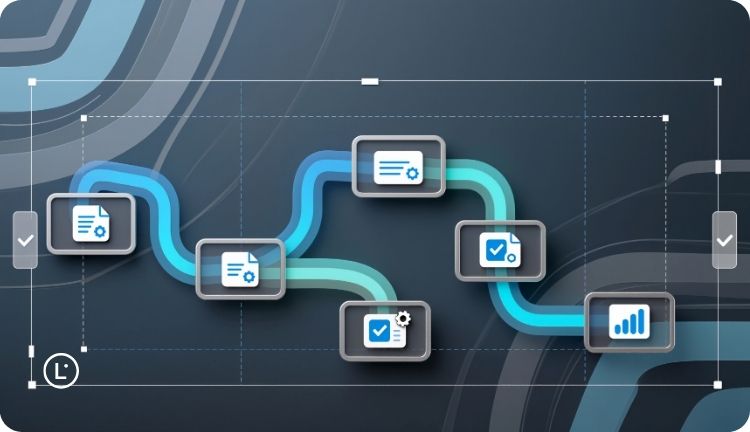
Who is using AI, and how?
| Segment | Adoption snapshot |
|---|---|
| Freelance translators | Use AI for draft creation, terminology suggestions, and high-volume, low-risk work. |
| In-house & corporate linguists | Work inside AI-enabled workflows defined by large clients and language partners. |
| Translators in regulated fields | Move more cautiously, often in pilot projects with strict human review. |
In Europe and other mature translation markets, AI translation for freelancers has become especially important where deadlines and price pressure are strong.
Why adoption is high but not carefree
Even with wide adoption, many translators remain cautious because of:
- Concerns about lower rates if clients assume “the machine did everything”.
- Questions about data security and confidentiality.
- Worries about long-term impact on roles, recognition, and career paths.
- The need to maintain strong quality control and clear human oversight.
For many professionals, the main risk is not AI itself, but losing control over how it is used and perceived by clients.
The role of large companies and new skills
Multinational companies are a major driver of AI adoption:
- They integrate machine translation into CMS, support portals, and internal tools.
- They expect linguists to work inside AI-assisted workflows.
- They push for higher volumes and faster turnaround at stable or lower budgets.
As a result, traditional project structures are changing, and translators increasingly need skills in:
- Post-editing AI output.
- Working with AI and CAT tools together.
- Explaining their quality process and added value in AI-assisted projects.
In short, AI is already widely used. The translators who stand out are those who use it intentionally, with clear rules and a strong focus on quality and positioning.
How does AI translation actually improve productivity for professional translators?
AI translation tools for translators are best at saving time on first drafts, repetitive segments, and consistency checks. This lets professional translators focus on higher-value work such as style, cultural adaptation, and subject-matter accuracy.
Where AI saves the most time
When used strategically, AI translation can bring clear productivity gains in several parts of the workflow:
- First draft generation: AI produces an initial version quickly, so translators start from a draft instead of a blank page.
- Repetitive or technical content: AI accelerates translation of similar sentences, lists, and structured technical text.
- Terminology suggestions: AI helps keep terminology more consistent across long or complex documents.
- Routine decisions: AI handles simpler segments so translators can focus on nuanced or risky parts of the text.
How AI and humans split the work
| Task | How AI helps | Human focus |
|---|---|---|
| Initial draft | Generates a fast, reasonably accurate first version of each segment. | Refine meaning, tone, and register for the target audience. |
| Repetitive content | Detects patterns and reuses similar translations across the text. | Check edge cases and ensure no subtle changes of meaning are missed. |
| Terminology | Keeps term usage more consistent, especially when linked to TMs or term bases. | Confirm term choices, adapt to client preferences, and fix domain-specific errors. |
| Overall quality | Flags potentially problematic segments for closer review. | Ensure accuracy, cultural fit, and compliance with style and regulatory requirements. |
Consistency and cognitive load
For large projects or long-term clients, consistency is a major source of time savings. AI translation for freelancers and in-house linguists helps:
- Reduce manual cross-checking of terminology and phrasing.
- Keep similar segments aligned across different documents and updates.
- Lower cognitive load by handling routine segments, so translators can focus on complex passages.
Many professional translators report that AI-assisted translation makes it easier to dedicate mental energy to cultural nuances, creative adaptation, and final quality refinement — the work that clients actually notice and value.
Project management and CAT integration
Productivity gains are even stronger when AI works together with CAT tools and existing assets:
- AI and translation memories can suggest translations based on previous work and current context.
- Terminology databases can guide AI toward preferred terms and phrasing.
- Potential inconsistencies or risky segments can be flagged automatically for human review.
This combination streamlines the workflow, reduces administrative overhead, and helps freelance translators and teams handle larger volumes without losing control over quality.
Using AI as a productivity multiplier, not a replacement
To use AI translation effectively, translators need to decide which tasks benefit most from automation and which should remain fully human-controlled. A clear division of labor between AI and human judgment turns AI into a productivity multiplier instead of a threat.
For a more detailed breakdown of practical workflows, see the article on how AI tools are empowering human translators. It explores real-world use cases and concrete setups that keep human expertise at the center of the process.
Where does human expertise still matter most in AI-assisted translation?
AI translation tools are fast and consistent, but they still need human translators for quality control, cultural adaptation, and high-risk or specialized content. Human expertise turns raw AI output into text that is accurate, appropriate, and safe to publish.
Quality control and post-editing
Even when AI delivers good drafts, the final responsibility for quality sits with the professional translator. Post-editing is not simply “fixing a few words”; it is a specific skill set that includes:
- Analytical review of AI output: checking meaning, tone, register, and structure against the source text.
- Spotting systematic errors: identifying patterns such as false friends, mistranslated terms, or broken logic.
- Deciding effort level: knowing when a segment needs light touch-ups versus full retranslation.
- Ensuring coherence: making sure the whole text reads as one coherent piece, not as a patchwork of machine suggestions.
Translators who master post-editing can position themselves as quality enhancement specialists who take AI drafts and deliver publication-ready translations.
Cultural adaptation, nuance, and tone
Cultural and stylistic decisions are still very hard to automate. Human translators add value by:
- Interpreting idioms, humor, and references that do not work literally in the target language.
- Adjusting tone and formality to match the brand, audience, and communication goal.
- Spotting cultural sensitivities or implications that AI might miss or mishandle.
- Choosing when to adapt, localize, or completely rephrase content to keep the intended impact.
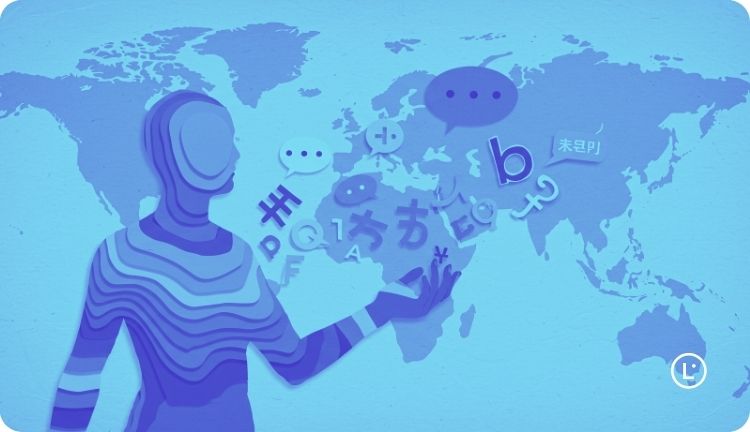
In these cases, AI translation for freelancers and in-house linguists is most useful as a starting point. The real value comes from the human rework that makes the text feel natural, respectful, and on-brand.
Technical accuracy and risk management
In specialized domains, small errors can have serious consequences. Human subject-matter expertise is still essential in areas such as:
| Domain | Why AI struggles | Human translator’s role |
|---|---|---|
| Legal | Complex concepts, jurisdiction-specific terminology, and high liability. | Validate legal meaning, ensure correct terminology, and maintain compliance with local law. |
| Medical & pharmaceutical | Safety-critical information, tightly regulated wording, and nuanced clinical language. | Check every term and statement for accuracy, clarity, and regulatory alignment. |
| Technical & engineering | Complex procedures, interdependent systems, and safety instructions. | Ensure instructions are unambiguous, technically correct, and safe for end users. |
| Financial & business | Subtle meaning in numbers, projections, and compliance disclosures. | Protect against misinterpretation, misstatement of risk, and reputational damage. |
In these contexts, AI-savvy professional translators can charge premium rates for expert review and sign-off services, because they actively reduce risk for clients.
Explaining quality to clients
Human translators also play a crucial role in explaining how quality is achieved in AI-assisted workflows. This includes:
- Describing the steps they take to review and correct AI output.
- Clarifying which parts of the process are automated and which are handled manually.
- Showing examples of issues that AI tends to miss and how they fix them.
- Setting realistic expectations for turnaround times, cost, and quality when AI is involved.
Transparent communication builds trust and helps clients see human translators as quality architects, not just “editors of machine output”.
Human translators as quality architects
In AI-intensive workflows, the role of the translator is evolving from purely producing words to designing and supervising quality. Translators decide:
- When AI can be used safely and where it should be limited.
- Which content requires full human translation from scratch.
- How to combine CAT tools, AI, and human review for each project type.
For a deeper look at how this role is changing, see the article on the role of human translators in an AI-powered world. It explains how expertise, responsibility, and judgment continue to create long-term value even as AI handles more of the routine work.
Which translation specializations still command premium rates in the age of AI?
AI translation opens new opportunities, but specialized domains where quality, risk, and compliance matter still pay premium rates. In these areas, AI is an efficiency booster, while human expertise remains the deciding factor for accuracy and safety.
High-value niches where human expertise leads
Some specializations are particularly resilient to pure automation because errors are costly and trust is critical. In these niches, AI translation for professional translators is most powerful when used as a support tool, not as a substitute for expertise.
| Domain | Why clients still pay premium rates | Role of AI + human translator |
|---|---|---|
| Legal translation | High liability, strict regulatory requirements, and need for precise legal meaning. | AI drafts contracts or legal texts; human experts validate concepts, terminology, and jurisdiction-specific nuances. |
| Medical & pharmaceutical | Patient safety, clinical accuracy, and regulatory submissions with zero tolerance for errors. | AI accelerates clinical or trial documentation; human specialists ensure safe, compliant wording. |
| Technical documentation | Complex systems, safety instructions, and long-term maintenance implications. | AI handles repetitive terminology; human translators secure clarity, usability, and safety. |
| Marketing & transcreation | Brand voice, emotional impact, and cultural fit cannot be automated reliably. | AI provides rough ideas or literal drafts; humans re-create messages that resonate in each market. |
| Financial & business | Investor trust, compliance, and subtle meaning in numbers, risks, and strategy. | AI supports routine phrasing; human translators protect meaning, tone, and regulatory alignment. |
Legal translation: high stakes, high expectations
 Legal translation remains one of the most lucrative fields because small mistakes can have major legal or financial consequences. In this space:
- AI translation tools for translators can draft contracts, NDAs, and terms faster, especially when documents share similar structures.
- Human legal translators ensure that complex concepts are correctly transferred between legal systems and that language meets local requirements.
- Clients pay premium rates for the assurance that a qualified professional has checked every clause, not just a machine.
This combination offers better productivity without undermining the expertise premium that legal translation traditionally commands.
Medical and pharmaceutical translation: safety first
 In medical and pharma content, AI translation for freelancers and in-house specialists can speed up work on:
- Clinical trial reports and study documentation.
- Internal research summaries and training materials.
- Supporting documents for regulatory submissions.
However, human medical translators still need to:
- Verify the precise meaning of clinical terminology and abbreviations.
- Ensure that patient-facing content is clear, safe, and culturally appropriate.
- Check that documentation complies with national and international regulations.
Because the risks are so high, clients typically accept and expect premium rates for human oversight.
Technical documentation: volume with precision
 Engineering, software, and manufacturing documentation often involve large volumes and repetitive structures. Here, AI translation shines at:
- Handling repeated segments across manuals, datasheets, and help content.
- Suggesting translations for similar procedures, warnings, and configuration steps.
Human technical translators then:
- Validate that safety instructions are unambiguous and correct.
- Ensure consistency across related products, versions, and platforms.
- Adapt language for different user types (end users, technicians, engineers).
This setup lets translators handle more volume while maintaining the precision required for user safety and operational effectiveness.
Marketing and transcreation: creativity cannot be automated
 For brand, marketing, and creative content, AI is still limited. It can:
- Provide a literal version of the source text.
- Offer alternative phrasings or ideas at the brainstorming stage.
But human transcreation specialists are the ones who:
- Rebuild campaigns so they feel natural and compelling in the target culture.
- Protect and adapt brand voice across different languages and channels.
- Choose metaphors, references, and emotional cues that actually resonate.
In this domain, AI-assisted translation is a starting point, not the final product. Clients pay premium rates for creative work that moves people, not just for words that “look correct”.
Financial and business translation: trust and clarity
I n financial and corporate communication, AI can help with:
- Routine sections in reports, earnings releases, and internal updates.
- Standardized phrasing around recurring concepts and disclosures.
Human financial translators remain essential for:
- Ensuring figures, risks, and forecasts are presented clearly and accurately.
- Adapting content to different regulatory and reporting frameworks.
- Maintaining the right tone for investors, regulators, and internal stakeholders.
Positioning AI as an efficiency enabler
Across all these specializations, the key to maintaining premium rates is to frame AI as an efficiency enabler, not a quality substitute. The strongest positioning for AI-savvy translators is:
- “AI does the heavy lifting, I am responsible for quality.”
- Clients benefit from faster delivery and better consistency, without losing the safety of human review.
- Translators handle more projects, while their expertise remains central to risk management and decision-making.
In other words, AI translation for professional translators increases capacity, but it is still human specialization that justifies higher pricing.
How can translators build sustainable business models with AI translation?
Sustainable business models with AI translation focus on value, not just speed. Translators combine AI efficiency with human expertise to offer premium quality, consulting, training, and ongoing support, instead of competing directly with raw machine translation on price.
From “per-word vendor” to value partner
Professional translators who integrate AI successfully do not simply lower rates because the work is faster. Instead, they:
- Use AI to increase capacity and consistency.
- Keep human expertise at the center of quality and risk management.
- Design services that clients see as strategic, not interchangeable.
Business models that work well with AI translation
| Model | What it is | Why it works with AI |
|---|---|---|
| Hybrid pricing | Mix of AI-assisted volume work and premium fees for expert review and adaptation. | Keeps rates competitive for large projects while protecting margins for high-value tasks. |
| Quality assurance specialization | Positioning as a quality and risk management expert for AI-generated content. | Clients pay for safety, accuracy, and compliance, not just for raw word output. |
| Consulting on workflows | Advising clients on when to use AI, when to use humans, and how to structure workflows. | Moves you from “vendor” to strategic partner, often at consulting rates. |
| Training & education | Workshops, guides, and training for teams using AI and CAT tools. | Generates additional revenue streams beyond project-based translation. |
| Subscriptions & retainers | Ongoing deals with clients for recurring AI-assisted translation and review. | Provides predictable income and deeper client relationships. |

Hybrid pricing: AI speed, human value
Hybrid pricing is one of the most practical ways to build a sustainable model with AI translation:
- Offer competitive rates for AI-assisted first drafts on high-volume or low-risk content.
- Charge premium fees for post-editing, cultural adaptation, and domain-specific review.
- Make it clear that clients are paying for outcomes (quality, safety, consistency), not just for raw speed.
This approach lets translators win larger projects that might otherwise go to pure machine translation services while keeping margins healthy on the work that actually requires expertise.
From translator to consultant
Consultative positioning turns AI translation for freelancers and in-house linguists into a lever for higher-value services. As a consultant, you help clients:
- Decide which content can safely go through AI-first workflows.
- Define where human oversight is mandatory (legal, medical, brand-critical content).
- Set up processes for consistent terminology, style, and quality checks.
These services often command higher hourly or project-based fees than traditional translation alone, because they directly impact efficiency and risk.
Quality assurance as a service
Another sustainable model is to position yourself as a quality enhancement specialist. Instead of competing with AI on speed, you:
- Take AI-generated content and bring it up to publication or regulatory standards.
- Document the issues you find and explain how you fixed them.
- Offer different levels of review (light PE, full PE, compliance check) with clear pricing.
This keeps your role tightly linked to accuracy, brand safety, and compliance — areas where clients are willing to pay more.
Training, education, and internal enablement
Many organizations want to use AI translation but do not know where to start. Experienced translators can create:
- Training sessions on how to prepare content for AI translation.
- Guides on how to evaluate AI output and when to escalate to human review.
- Internal best-practice documents that define safe use of AI in the company.
These services generate additional income and position you as a go-to expert for AI and CAT tool integration.
Retainers and subscription-style agreements
For clients with ongoing multilingual needs, subscription and retainer models can be very effective:
- Clients pay a fixed monthly or quarterly fee for a defined volume of AI-assisted translation and review.
- You provide continuous quality oversight, terminology management, and style consistency.
- Both sides gain predictability: stable income for you, stable support for the client.
Seeing AI as a capability enhancer
Across all these models, the common mindset is that AI translation is a capability enhancer, not a threat. The goal is to:
- Use AI for what it does best: speed, pattern recognition, and consistency.
- Reserve human time for judgment, creativity, and risk-sensitive decisions.
- Design offers that make this combination explicit and easy for clients to understand.
For a broader view on how to design these workflows, see our guide on how to use AI translation, which outlines best practices for integrating AI into professional services without weakening your position.
Why is Lara Translate a professional-grade AI tool for translators?
Lara Translate is built for professional use. It combines high-quality AI output with control over terminology, context, formatting, and workflows, so translators can work faster without losing ownership of quality.
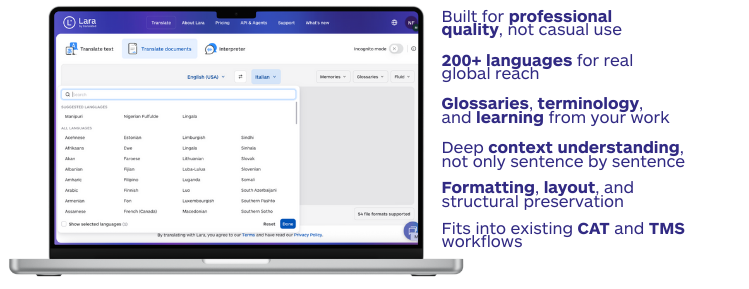
Built for professional quality, not casual use
 Unlike consumer-oriented tools, Lara Translate is designed for client work. It gives translators:
- Reliable, context-aware drafts that respect tone and intent.
- Controls that help maintain consistency across large projects and long-term clients.
- Features that support specialized terminology and complex file formats.
200+ languages for real global reach
 Lara Translate supports more than 200 languages, including wide regional varieties and niche markets. This gives translators the freedom to:
- Handle rare or emerging language combinations without changing tools.
- Support clients who work in multiple regions with a single platform.
- Expand their own service offering without worrying about technology limits.
For up-to-date details on language coverage, see the official article on
What languages are supported?
Glossaries, terminology, and learning from your work
 Advanced terminology management lets translators build client-specific glossaries and keep terminology under control. In practice, this means:
- Consistent use of key terms across documents, versions, and channels.
- Faster onboarding for new projects that share similar subject matter.
- Less manual correction of terms that matter for brands or regulated content.
Combined with translation memory style learning, Lara Translate uses previous work to improve future suggestions, which is especially valuable for long-term client relationships.
Deep context understanding, not only sentence by sentence
 Lara Translate is designed to work with context, not only isolated segments. Its context understanding features help it:
- Take document structure, audience, and purpose into account.
- Produce drafts that are more coherent and closer to the desired style.
- Reduce the amount of heavy post-editing needed on well-prepared content.
For professional translators, this means more time spent on fine-tuning and localization, and less time fixing basic misunderstandings of the text.
Formatting, layout, and structural preservation
 The platform preserves formatting, layout, and structural elements in complex files. This is particularly useful when working with:
- Documents that contain tables, diagrams, or numbered lists.
- Files with formulas, captions, or footnotes that must remain aligned.
- Multicolumn layouts and presentation files prepared for clients.
Keeping structure intact reduces the time translators or project managers spend fixing layouts after translation and lowers the risk of errors introduced during manual reformatting.
Fits into existing CAT and TMS workflows
 Lara Translate is built to work alongside existing CAT tools and translation management systems rather than replacing them. Integrations and connectors allow translators to:
- Use Lara as an MT provider directly inside familiar CAT environments.
- Combine AI output with translation memories and term bases they already trust.
- Scale workflows without forcing teams to change their everyday tools.
Instead of breaking existing processes, Lara Translate enhances them and supports more efficient, repeatable workflows for translators, LSPs, and in-house teams.
Try Lara Translate in your own workflow
Test Lara Translate on a real client text and see how it handles your terminology, context, and formatting.
What will the role of professional translators look like in an AI-powered future?
AI will not remove the need for professional translators. It will change what “professional” means: less time spent typing first drafts, more time spent on quality, specialization, consulting, and workflow design.
New core roles for AI-savvy translators
| Role | Main focus | How AI fits |
|---|---|---|
| Post-editing & QA specialist | Turn AI drafts into publication-ready, compliant content. | AI handles volume; humans control risk, nuance, and final quality. |
| Workflow & AI consultant | Advise clients on when to use AI, when to use humans, and how to combine both. | AI is a live demo and testbed for better processes. |
| Trainer & educator | Teach teams how to prepare content, review AI output, and stay within policy. | AI provides examples, edge cases, and real training material. |
| Specialized domain expert | Own high-risk areas (legal, medical, technical, financial) where expertise is non-negotiable. | AI speeds up drafts; humans safeguard meaning, safety, and compliance. |
What translators need to thrive
To stay relevant and profitable as AI use grows, professional translators will need to:
- Invest in post-editing and quality assessment skills, especially in critical domains.
- Understand AI and CAT tools well enough to design and explain hybrid workflows.
- Strengthen subject-matter expertise so they can catch errors AI will never see.
- Communicate clearly with clients about how quality is achieved in AI-assisted projects.
From “just translating” to designing value
The future role of professional translators is not limited to producing words in another language. It is about designing how AI and humans work together — deciding where AI can help, where it must be constrained, and how to deliver safe, accurate, culturally appropriate content at scale.
Translators who embrace AI as a tool, keep sharpening their expertise, and position themselves as quality and strategy partners will be the ones who grow as the industry evolves.
Thank you for reading 💜
As a thank you, here’s a special coupon just for you:
IREADLARA25.
Redeem it and get 10% off Lara PRO for 6 months.
If you already have a Lara account, log in here to apply your coupon.
If you are new to Lara Translate, sign up here and activate your discount.
FAQs
Will AI translation replace professional translators?
No. AI translation will not replace professional translators; it handles fast, consistent drafts and repetitive content, while humans are still needed for nuance, cultural adaptation, risk management, and sensitive or regulated texts where mistakes are expensive.
How can translators use AI tools without compromising quality?
Use AI translation tools for first drafts, pattern recognition, and terminology suggestions, then always apply human post-editing to refine tone, meaning, and style. Clear QA steps, glossaries, and translation memories ensure that AI speeds up your work while your expertise keeps the final quality professional.
What types of translation projects work best with AI assistance?
High-volume, repetitive, and structured content works best with AI assistance: technical documentation, product descriptions, support articles, knowledge bases, software strings, and internal communications. Creative marketing, legal, and medical content can start from AI drafts, but they still require careful human review, cultural localization, and subject-matter expertise.
How should freelance translators price AI-assisted translation services?
Freelance translators should price AI-assisted translation based on value, not just speed. A common approach is hybrid pricing: a base rate for AI-assisted draft production plus higher rates for expert post-editing, cultural adaptation, compliance checks, and final QA, so pricing reflects risk and outcomes instead of only time spent.
What skills do translators need to work effectively with AI?
Translators need strong post-editing and error-spotting skills, the ability to evaluate AI output critically, and experience managing translation memories and terminology databases. Familiarity with CAT tools, AI-assisted workflows, and domain-specific knowledge makes it easier to catch subtle issues that AI misses and to position yourself as a quality and strategy partner.
This article is about
-
How AI translation for professional translators can increase productivity, reduce repetitive work, and free time for higher-value tasks without sacrificing quality.
-
Practical strategies to integrate AI tools into professional translation workflows while keeping human oversight, strong quality control, and clear added value for clients.
-
Revenue and specialization opportunities in legal, medical, technical, financial, and marketing translation, where human expertise remains essential alongside AI-powered efficiency.
-
New business models that position translators as post-editing and quality experts, workflow consultants, and long-term partners rather than simple “per-word” vendors.
-
Future trends in the translation industry, including post-editing specialization, training and consulting services, and technology partnerships between AI platforms and professional translators.
Have a valuable tool, resource, or insight that could enhance one of our articles?
Submit your suggestion
We’ll be happy to review it and consider it for inclusion to enrich our content for our readers! ✍️